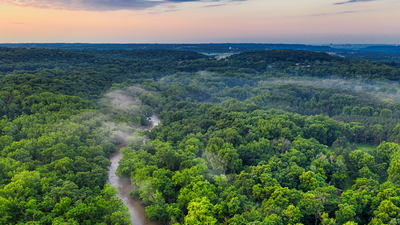








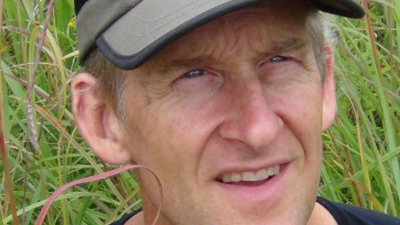
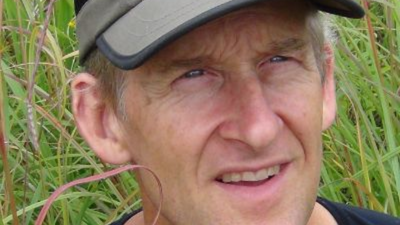
Mike Niziolek, a former AP biology teacher decided that he did not want to limit his impact in the world to his classrooms and wanted to do something for the planet he loves so much. This is why he has spent the past thirty years, returning his 150-acre property Elk River, Sherburne County, Minnesota to the state it was in hundreds of years ago, before humans intervened with their lives and presence on it. He has spent decades working to recreate the condition of the land hundreds of years ago.For Niziolek, this is a critical mission. Scientists estimate Minnesota has lost 50% of its original wetlands. In the southern part of the state, it’s more than 90%. “In this case, we’re trying to restore them, which is a much more difficult task than saving the ones that we already have,” Niziolek said. “But we’re going to try, because it’s definitely worth the effort.”“He has been slowly and methodically transforming pastured land to oak savanna, tilled land to prairie, and ditches to wetlands,” says his bio on the Minnesota Land Trust. In 2018, the nonprofit awarded him the Landowner of the Year award. In 2024, Niziolek completed another wetland project on his land. According to him, restoring wetlands “is a much more difficult task than saving the ones that we already have.”In his effort to restore the wetlands in US, Niziolek has received financial and technical help from the US Fish and Wildlife Service’s Partners for Fish and Wildlife Program. “We help the landowner try to manage the site in perpetuity so that they can be successful,” said John Riens, a biologist with the Fish and Wildlife Service, to MPR. Together, the Fish and Wildlife Service and the Nature Conservancy have completed 72 wetland restoration projects in the last five years.But recreating a complex wetland is not as simple as digging a hole and waiting for it to fill with water. First, restoration experts analyse the site, take soil samples and look to its past. “We look at old imagery of what it might have looked like previously, or try to get a better understanding of historically what it was,” Riens said.Using that information they design a unique plan for the site and hire local contractors to remove dirt and construct the wetland. It takes time and effort to establish native plants and keep out invasive species like buckthorn, Riens said. “Then we help the landowner try to manage the site in perpetuity so that they can be successful,” he said.
A critical project
Despite the tremendous amount of work that goes into restoring a wetland, Niziolek sees it as a critical mission. The wetlands that he has previously restored on his property are already “teeming with life,” he said. By his estimate, 15 to 20 types of unique plants grow in this wetland he restored in the early 1990s. If he were to dip a container in the water, it would reveal countless species of invertebrates. “There are so many critters that use these spaces, either directly or indirectly. It’s amazing.”The former biology teacher says that the rich biodiversity in his and other wetlands makes them “bio supermarkets.” These attract migrating sandhill cranes and monarch butterflies, as well as providing a sanctuary for threatened species like Blanding’s turtles that are now present on his property.Furthermore, they provide protection from excess water flows from heavy rains and snowmelt, by storing floodwaters and releasing them slowly downstream. Additionally, the longer the water is held back, the more excess nutrients and sediment from runoff can be processed and filtered, improving water quality. On top of that, keeping the water on the land helps replenish the underground aquifers and provide much-needed water to plant life.Wetlands, especially those with peat bogs, are very effective at sequestering carbon dioxide from the atmosphere, making them carbon sinks, a vital tool for combating climate change. “That’s a carbon storage system that we can utilise to mitigate the human cost of climate change,” he said.
American wetlands at risk
Wetlands are extremely important ecosystems not only for the flora and fauna, but also the wider ecosystem and humans, providing protection from flooding and climate change along with purification and storage of water resources. However, in US wetlands are under threat in numerous parts, with the rate of loss accelerating according to a 2024 report by the US Fish and Wildlife Service.Over the ten years the report analysed, 2009 to 2019, some 670,000 acres of wetlands were lost, roughly equivalent to the land area of Rhode Island. “Wetland loss leads to the reduced health, safety and prosperity of all Americans,” said Martha Williams, Director of the U.S. Fish and Wildlife Service.Nowadays, wetlands only cover 6% of the nation, half of the area in the 1780s. However, there is one state that has seen a net gain in wetlands in recent years thanks to conservation efforts. Minnesota, where Niziolek has been working to restore them.“I still have lots more to do, but I’m happy that this land is protected forever for future generations,” he told the Minnesota Land Trust.