









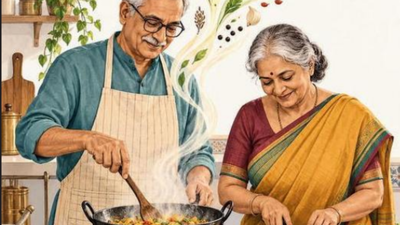
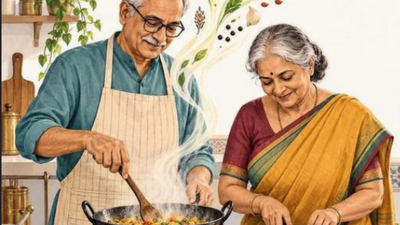
New Delhi: What if one of the simplest ways to keep the brain active later in life is already sitting in the kitchen? A six-year study from Japan has found that older adults who cooked at home at least once a week were less likely to develop dementia requiring long-term care than those who cooked less often.The population-based study followed 10,978 adults aged 65 years and older and recorded 1,195 cases of dementia during the six-year follow-up. After accounting for demographic, socioeconomic and health-related factors, men who cooked at least once a week had a 23% lower risk of dementia, while women had a 27% lower risk, compared with those who cooked less than once a week. The association was even stronger among people with low cooking skills. Among them, more frequent home cooking was associated with a 67% lower risk of dementia in older adults.The findings, published in the Journal of Epidemiology and Community Health, were based on data from the Japan Gerontological Evaluation Study. Researchers assessed cooking frequency and skills at the beginning of the study and then tracked dementia requiring care through Japan’s public long-term care insurance records.Dr (Col) Joy Dev Mukherji, chairman and head, neurology, Max Super Speciality Hospital, Saket, said cooking is a surprisingly complex activity from a neurological point of view. “It involves planning, attention, working memory, while also combining movement and sensory stimulation,” he said. However, he cautioned against interpreting the findings as proof that cooking prevents dementia.“This was an observational study and does not prove that cooking prevents dementia. It is also possible that people in the early stages of cognitive decline may gradually stop cooking because of difficulties with planning and memory,” he said.Dr Manjari Tripathi, head of neurology at AIIMS, highlighted the social dimension of cooking, saying preparing meals with friends, family or the wider community could provide additional cognitive and social engagement. She also encouraged men to cook, saying the activity must not be viewed as restricted to women.
Share your thoughts in the comments
Be respectful · TOI community guidelines
Interestingly, the association was strongest among people with lower cooking skills, possibly because less experienced cooks engage more in planning and problem-solving. However, this was not established by the study. Doctors said the broader message is to remain engaged in meaningful activities involving learning, planning, movement and social interaction, rather than viewing cooking as a treatment for dementia.