







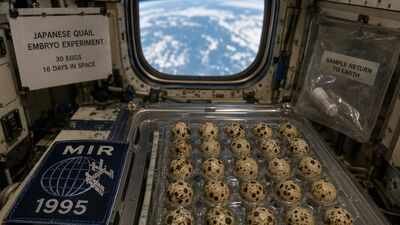
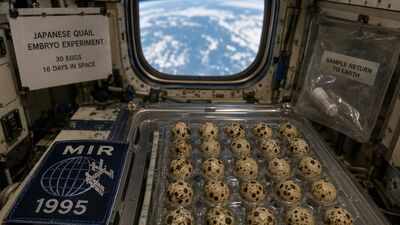
In 1995, a batch of fertilised Japanese quail eggs travelled from Earth to space station ‘Mir’ as part of an experiment designed to answer a question that, ‘can embryos develop normally without the pull of gravity.’ 30 eggs were incubated aboard the station for 16 days before their developing embryos were preserved for examination on Earth. The results were striking. According to Nasa astronaut Shannon Lucid’s account of the mission, abnormalities appeared at more than four times the rate seen in the Earth-based control group. Later scientific records showed that many embryos developed broadly as expected, but some displayed problems affecting their eyes, limbs and beaks. The experiment offered a glimpse into the biological challenges of reproduction and development during long-term spaceflight far beyond Earth.
Why did Nasa send fertilised Japanese quail eggs to the Mir space station
The experiment was part of a wider effort to understand how living things respond to microgravity. As humans began considering longer stays in space, scientists also needed to understand whether the earliest stages of life could continue normally away from Earth. Nasa’s historical account of astronaut Shannon Lucid’s Mir mission explains that the quail experiment was among the first investigations she carried out after arriving on the space station. The fertilised Japanese quail eggs travelled to Mir on the same Space Shuttle flight that carried Lucid there and were placed in an onboard incubator.Over the following 16 days, Lucid removed the eggs individually and preserved the embryos for examination after their return to Earth. The task was more difficult than it might sound. The embryos had to be fixed in a chemical solution while floating in microgravity. According to Nasa’s, safety rules required several layers of containment because an escaped drop could float through the station and seriously injure a crew member. Engineers at Nasa’s Ames Research Center designed a specialised system of interlocking bags and attached gloves to allow the eggs to be handled safely. The unusual experiment was ultimately aimed at a much larger question: ‘how important is gravity during the earliest stages of life.’
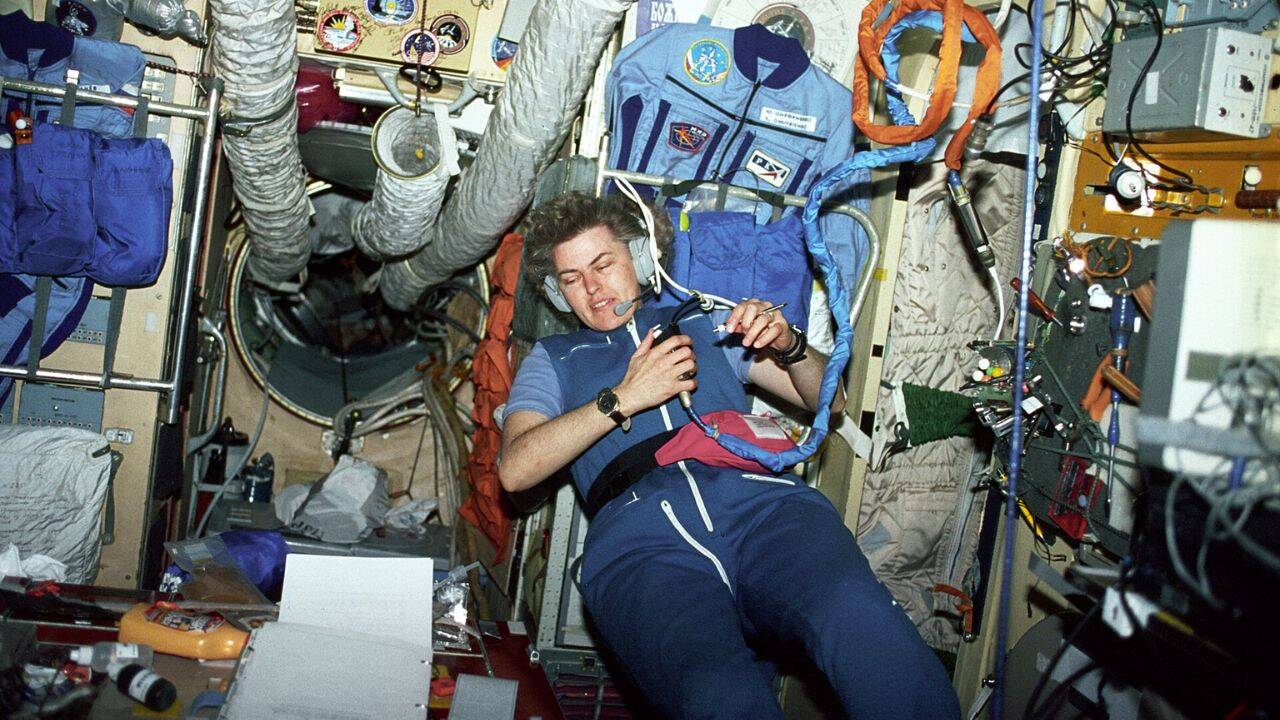
Astronaut Shannon W. Lucid communicates with the ground support team inside the Core Module of the Russian Mir Space Station. Image Credit: Nasa
The embryos grew in an environment unlike anything on Earth
On Earth, bird eggs develop under the constant influence of gravity. Inside Mir, the eggs experienced microgravity while also being exposed to the other unusual conditions of spaceflight. The scientific record preserved by Nasa described experiments carried out during the 1995–1996 Mir programme. It found that most of the embryos examined after spaceflight had reached broadly expected stages of development. However, the results also revealed some differences. The space-grown embryos showed slight delays in growth when their body mass was compared with laboratory and synchronous control groups. Their body length followed a similar pattern. Some embryos also displayed visible abnormalities. Nasa specifically described problems involving the eyes, limbs and beaks. These included unusually small or defective eyes, twisted fingers and abnormalities affecting the beak. The findings showed that the space environment did not prevent embryonic growth altogether, but it could introduce risks that were not normally present under controlled conditions on Earth.
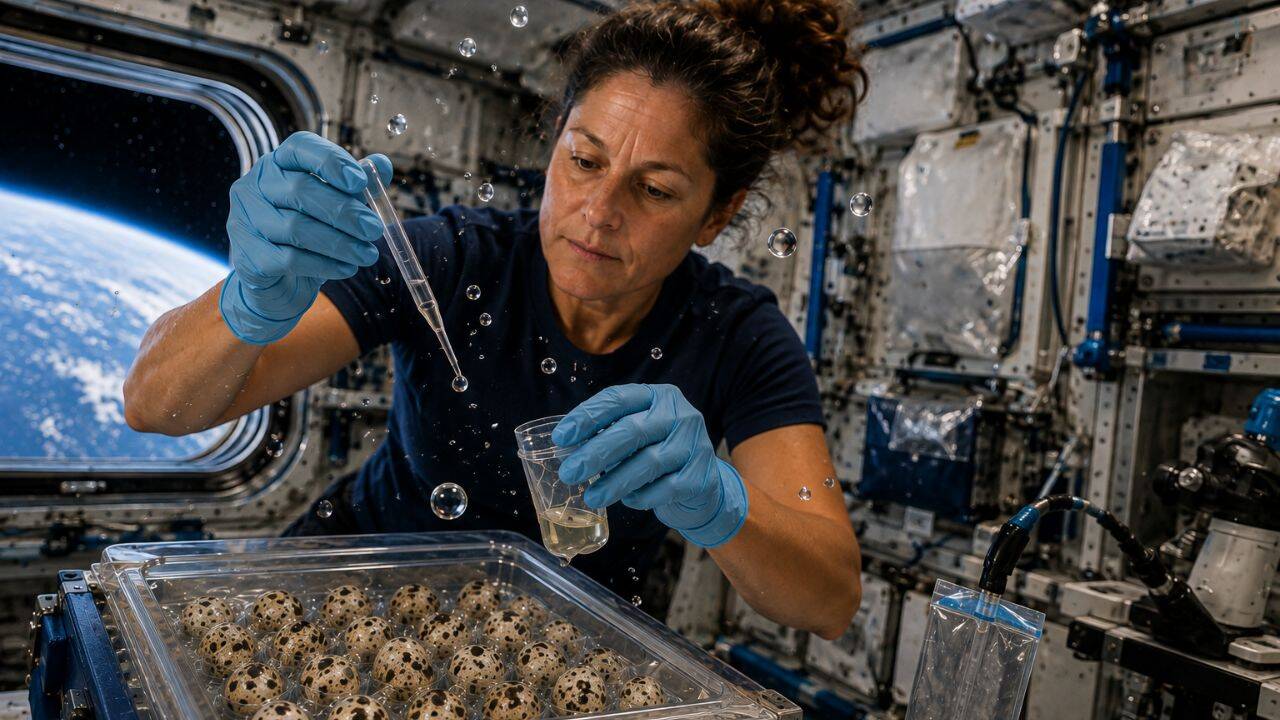
Image Credit: AI Generated
What did the higher abnormality rate reveal about life in space
In her Nasa-published account of the mission, Shannon Lucid wrote that investigators found an abnormality rate of 13% among the embryos incubated on Mir. This was more than four times higher than the rate seen in the Earth-based control embryos. However, the results did not prove that microgravity alone was responsible. Lucid noted that investigators believed at least two other factors could have contributed to the higher rate of abnormalities. One was the slightly higher temperature inside the Mir incubator. The other was the considerably greater radiation exposure experienced aboard the space station. This made the experiment particularly important because space does not present just one changed condition. The absence of normal gravity exists alongside radiation exposure, differences in temperature and other environmental factors. Separating the influence of each factor remains a major challenge in space biology.
A small experiment highlighted a much bigger challenge
The 30 Japanese quail eggs sent to Mir in 1995 represented a relatively small experiment, but the questions behind them were enormous. Nasa’s account of the mission showed the practical difficulties of carrying out delicate biological research in microgravity, while the later scientific records documented the results in greater detail. Most embryos reached broadly expected stages, but the higher abnormality rate and the growth differences showed that the space environment could not be treated as a simple substitute for conditions on Earth.The study was part of a broader series of investigations into avian embryogenesis during the joint Mir/Space Shuttle and Mir/Nasa science programmes. Researchers were examining how the earliest stages of life responded when the environmental conditions familiar on Earth were dramatically altered. The quail experiment therefore contributed to a growing area of research with implications for longer missions. As space agencies considered journeys lasting months or even years, understanding how living systems respond to space became increasingly important. Mir helped expose some of the biggest questions about the future of life beyond Earth.