






When America’s commander-in-chief President Donald Trump announced US strikes on Iran under the ambitious Operation Epic Fury in the early hours of February 28, there was little ambiguity about what Washington wanted from the campaign.This was not supposed to become another open-ended Middle Eastern war. The objective was to unleash overwhelming American military power, destroy Iran’s most dangerous capabilities, force Tehran to accept Washington’s terms and leave behind an Iran weakened enough that it could no longer pose the same strategic threat.Trump also appeared confident that the campaign would be relatively short. After his intervention in Venezuela earlier in 2026, he suggested that the war could last four or five weeks. Within days, he was already claiming that the military campaign was running ahead of schedule.“We’re already substantially ahead of our time projections,” Trump said on March 2, just days after the campaign began, while adding that whatever time the operation ultimately required would be acceptable.Six months later, those words carry a very different weight.The war has stretched far beyond Trump’s original timeline. Iran’s nuclear infrastructure has suffered extensive damage, its conventional military has taken a severe beating and its leadership has been transformed. Yet Tehran has not surrendered.Even the killing of Ayatollah Ali Khamenei, Iran’s longest-serving Supreme Leader and one of the most important figures in the history of the Islamic Republic, failed to bring down the government. Iran still retains missile capabilities, the Strait of Hormuz remains a major source of tension and Washington continues to negotiate over several of the same issues that were supposed to have been settled through military force.That leaves the central question as the war reaches its six-month mark: Trump may have won many of the battles, but did he achieve the objectives that took America into the war?
The mission, in Trump’s own words
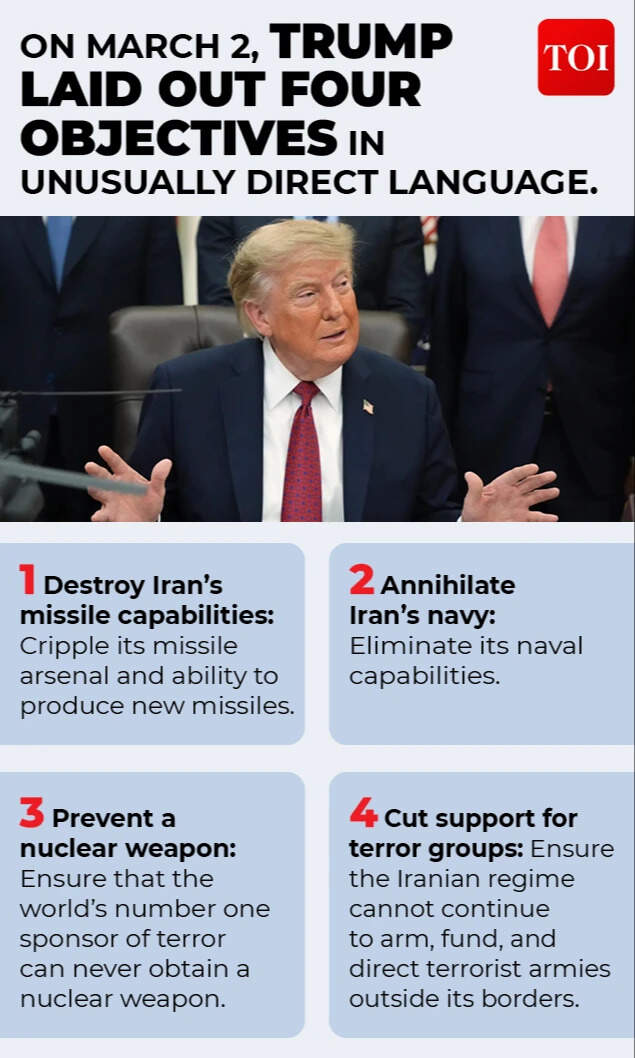
The clearest way to understand what Trump wanted from the war is to return to what he said at the beginning of the campaign.On March 2, Trump laid out four objectives in unusually direct language. He said the US wanted to destroy Iran’s missile capabilities and its capacity to produce new missiles, annihilate its navy, prevent Tehran from acquiring a nuclear weapon and stop the Iranian regime from arming, funding and directing militant groups beyond its borders.That was the core military mission.
But Trump’s rhetoric soon moved beyond missiles, ships and nuclear facilities. The war increasingly became a question about Iran’s political system itself, with Trump at various points calling on Iranians to take control of their future, raising the possibility of regime change and demanding what he described as “UNCONDITIONAL SURRENDER.”Destroying missile launchers is one objective. Forcing Iran to abandon its strategic ambitions, surrender on American terms and potentially change the government in Tehran represents a far more ambitious undertaking.Six months into the war, those two ambitions have produced very different results.
Iran’s missiles: Devastated, but not erased
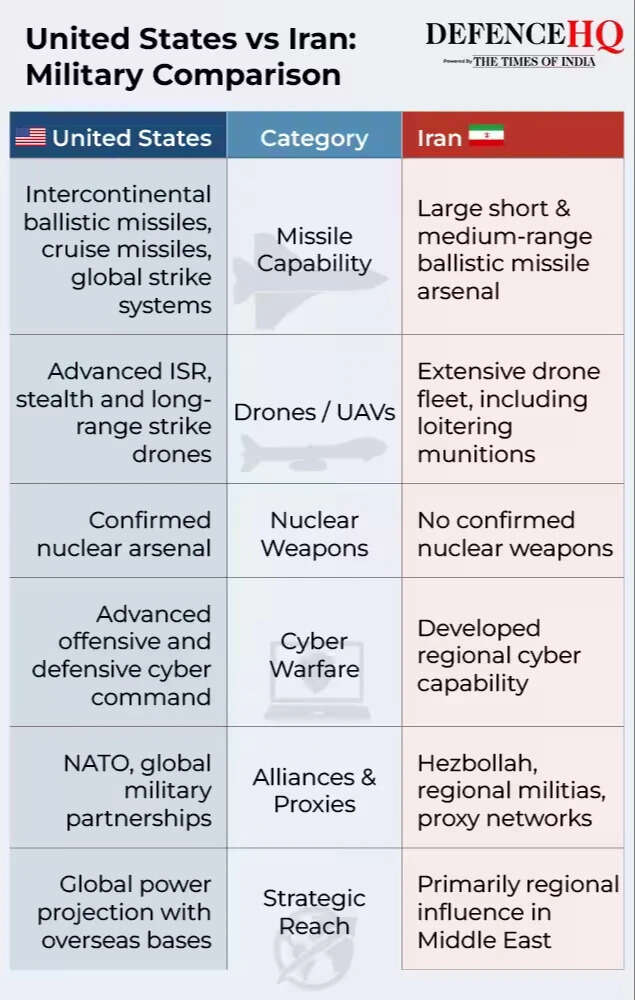
Few parts of Iran’s military infrastructure escaped the opening waves of American and Israeli attacks. Missile launchers, production facilities, command centres and air-defence systems were repeatedly targeted as Washington and Jerusalem sought to dismantle Tehran’s ability to wage war.By late March, Trump was already declaring major success. He said Iran’s missiles had been “mostly decimated” while claiming that around 90% of its missiles and launchers had been knocked out.Trump subsequently went even further, declaring that Iran had effectively lost its conventional military.“I think the war is very complete, pretty much,” he said on March 9, claiming that Iran had no navy, communications system or air force.The battlefield, however, soon complicated that assessment.Iran continued firing missiles, the fighting continued and Tehran retained enough military capability to impose costs on American forces and regional allies.Iran’s missile production and launch capabilities were severely degraded but did Washington achieve Trump’s original promise of destroying Iran’s ability to produce “brand new” missiles?Six months later, the answer appears to be no.Iran retains missile capabilities and, given sufficient time and resources, can rebuild parts of its arsenal. The result is therefore neither a clean American victory nor a straightforward failure.
The nuclear question is even harder
If missiles represented the most visible military target, Iran’s nuclear programme remained the strategic issue to which Trump repeatedly returned.The message from Washington was straightforward: Iran could not be allowed to acquire a nuclear weapon.Trump has overseen two major American military campaigns targeting Iran’s nuclear ambitions, Operation Midnight Hammer in 2025 and Operation Epic Fury in 2026. This year’s strikes inflicted enormous damage on Iran’s nuclear infrastructure, and Trump subsequently described the programme as devastated.But there is a problem that airstrikes cannot easily solve: knowing exactly what remains.Six months into the war, Washington still lacks the certainty required to declare Iran’s nuclear question permanently settled. International inspectors have faced enormous difficulties assessing the aftermath, while one of the most serious unresolved questions concerns Iran’s stockpile of highly enriched uranium.Reuters reported in August that the IAEA had been unable to verify the location of roughly 440 kg of uranium enriched to 60%, leaving uncertainty about where the material was located and what Tehran might ultimately do with it.That goes to the heart of the nuclear problem.Destroying a facility does not necessarily mean destroying the underlying capability. Trump can point to craters, damaged buildings and destroyed infrastructure, while Iran can point to assets that are far harder to eliminate through airstrikes, including scientific knowledge, personnel and nuclear material.Iran’s foreign minister Abbas Araghchi has also maintained that the country’s nuclear rights cannot simply be erased through military pressure.The nuclear objective remains one of the most important unresolved parts of Trump’s war.
Iran’s military: The clearest American success
If there is one part of the war where the scoreboard is relatively straightforward, it is Iran’s conventional military.The US and Israel have inflicted enormous damage on Iranian air defences, missile infrastructure, naval assets and command structures. The scale of that destruction would have been difficult to imagine before the war began, while the killing of senior commanders and destruction of military facilities further reduced Tehran’s ability to wage a conventional conflict against the US.But military success and political success are not the same thing.Iran did not necessarily need to defeat the US in a conventional battle. Its more immediate requirement was to survive the campaign, preserve the state and retain enough military capability to prevent Washington from dictating the terms of the conflict entirely.And it has survived.The Iranian government remained in place even after Ayatollah Ali Khamenei was killed. The country’s institutions continued functioning, while Tehran retained enough military capability to threaten American interests and keep the confrontation alive.That makes Trump’s military achievement significant, but it also leaves the strategy for ending the war incomplete.
Khamenei is gone, but the regime survived
The death of Khamenei was arguably the most consequential single event of the war. For decades, he had been the central figure of the Islamic Republic, and his removal created the possibility that Iran’s political system could collapse under the shock.That did not happen.Iran’s political system absorbed the blow and produced a new leadership structure, demonstrating that the Islamic Republic was considerably more resilient than a campaign focused on eliminating senior leaders may have assumed.Washington never maintained a perfectly consistent public formulation over whether regime change was an official war objective. Trump nevertheless repeatedly encouraged Iranians to challenge their rulers and spoke about the possibility of a political transformation.The war did change Iran’s leadership, but it did not change Iran’s regime.
The proxy network: Weakened, not wiped out
Another important element of Trump’s original mission was to prevent Iran from arming, funding and directing militant groups across the Middle East.Here too, the war has inflicted substantial damage.Iran’s ability to provide weapons, money and logistical support has been weakened by the destruction of military infrastructure and the collapse in oil revenues. Yet the regional network has not simply disappeared.Many groups linked to Tehran possess their own organisational structures, local political interests and independent sources of support. That means even a severely weakened Iran can retain influence across the region.The war may have altered the regional balance considerably, but it has not erased the network.
Then came the demand: ‘Unconditional Surrender’
Perhaps no Trump phrase better captures the evolution of the conflict than “UNCONDITIONAL SURRENDER”.The demand left little room for compromise, and Iran unsurprisingly rejected it. Iranian officials repeatedly insisted that Tehran would negotiate only on terms that protected its sovereignty and security.In May, Iranian parliament Speaker Mohammad Baqer Qalibaf told Pakistan’s army chief and field marshal Asim Munir that Tehran would not compromise in negotiations with Washington. By August, foreign minister Araghchi was even more explicit, saying that Iran had not yet decided to restart negotiations with the US.Araghchi later said talks would not resume while Washington was violating the interim agreement reached in June.The positions of the two sides had effectively become mirror images of one another.Washington wanted Iran to make major concessions before US pressure was eased, while Tehran wanted the pressure reduced before making significant concessions.That deadlock has helped keep the war alive.
From bombs to sanctions
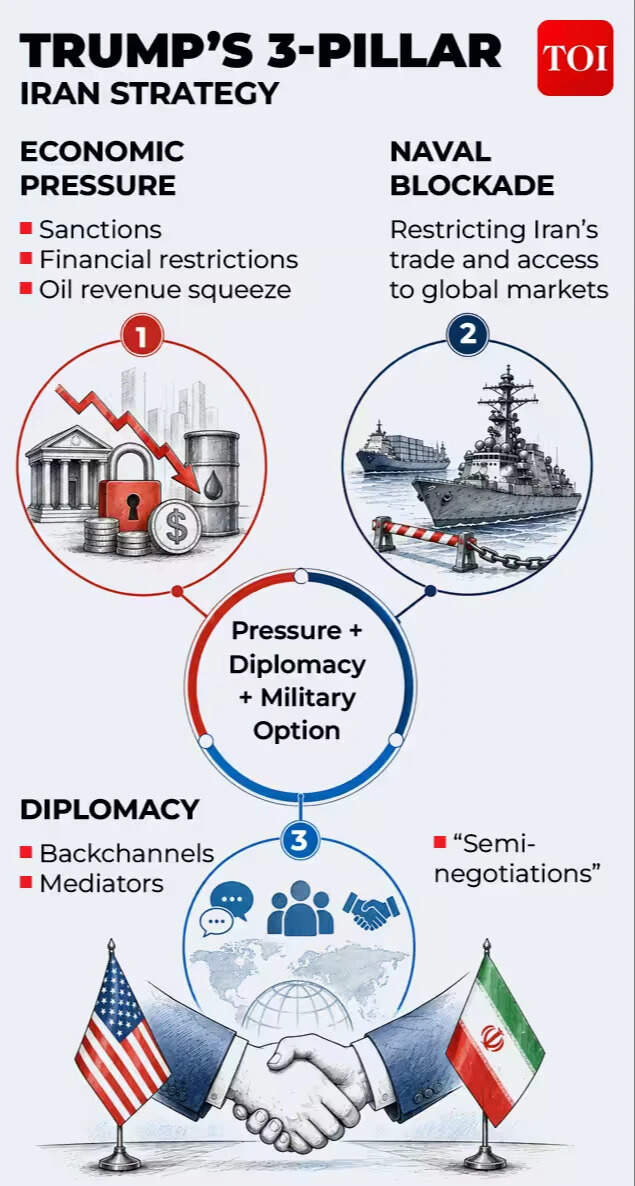
By summer, another shift was becoming increasingly visible as the war proved difficult to sustain through military force alone.The US had spent enormous sums and consumed large quantities of precision munitions, prompting Washington to lean harder on economic pressure and sanctions. Trump’s administration sought to squeeze Iranian oil revenues, punish countries and companies dealing with Tehran and isolate the Iranian economy.In August, US Treasury Secretary Scott Bessent warned that Washington was preparing what he described as the “toughest sanctions in history” against Iran.The calculation is straightforward: Iran may eventually accept terms it has rejected on the battlefield if its economy becomes too weak to sustain the confrontation.But Iran is already paying a huge price.President Masoud Pezeshkian said Iranian foreign trade had fallen by nearly 35% because of sanctions and the naval blockade, while Reuters reported that inflation had reached 66%.Yet Tehran has not capitulated.Pezeshkian has acknowledged the economic pain while continuing to insist that Iran will not surrender its core interests.
Strait of Hormuz
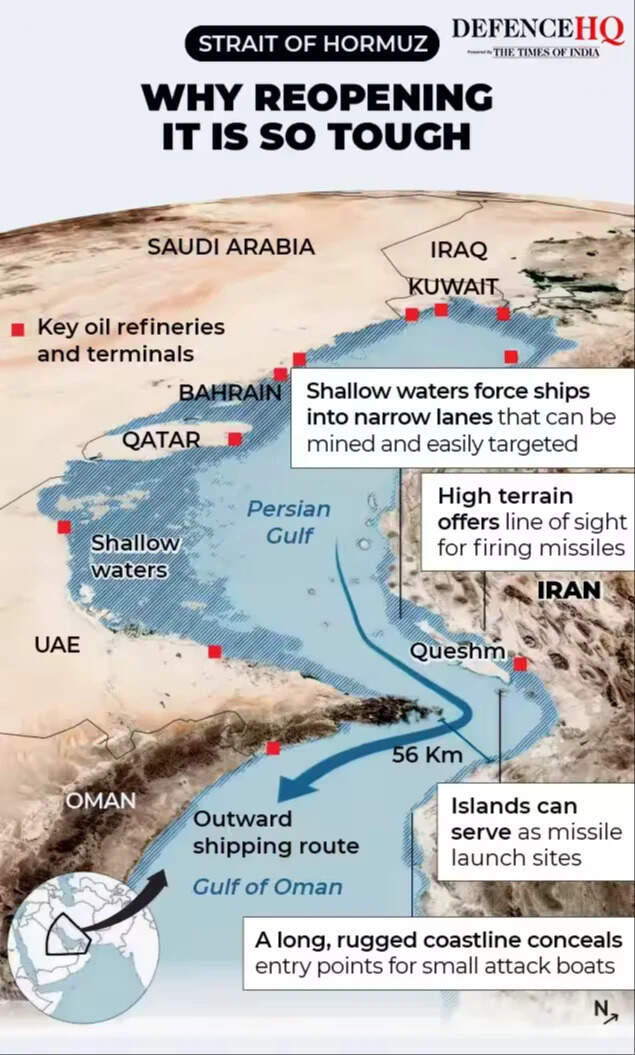
Perhaps the most striking change in Trump’s war objectives has been the growing importance of the Strait of Hormuz.At the beginning of the conflict, the central strategic question was Iran’s nuclear programme. Six months later, one of Washington’s most urgent concerns is whether ships can safely pass through one of the world’s most important energy chokepoints.Trump has repeatedly claimed that Hormuz remains open and functioning, but the reality has been considerably more complicated. Iran has used its position around the waterway as leverage in negotiations, turning the strait into one of the most important bargaining chips in the conflict.In August, Tehran said a deal with Oman over control of the Strait was close, while warning that such an agreement would not automatically reopen the waterway.Trump, meanwhile, increasingly made the reopening of Hormuz part of his demands. On August 2, he said the US had held off a “massive attack” on Iran to facilitate a deal that would end Tehran’s nuclear ambitions and reopen the Strait.The shift is revealing.A war that began with the stated objective of destroying Iran’s military capabilities had become, at least in part, a negotiation over access to a waterway that Tehran can threaten and use as leverage even if it cannot control the strait indefinitely.
So, where does Trump stand now?
The answer depends largely on which version of Trump’s mission is being measured.If the objective was to destroy Iran’s conventional military, Washington has come close to achieving it. If the aim was to cripple Iran’s missile programme, the United States has inflicted extraordinary damage but has not eliminated the capability.If the objective was to destroy Iran’s nuclear infrastructure, much of the physical infrastructure has been devastated, but the ultimate nuclear question remains unresolved.If Washington wanted to break Iran’s regional network, that network has been significantly weakened but continues to survive.If the objective was to bring down the Iranian regime, that has not happened.If Trump wanted Tehran to accept unconditional surrender, that has plainly not happened.And if the goal was to end the war quickly, Trump’s original timeline has been decisively missed.Perhaps the clearest measure of that gap can be found in Trump’s own language.In March, he described the war as “very complete, pretty much”. By the end of March, he said the “core objectives” were nearing completion and suggested the conflict could end within two or three weeks.By July, his message had changed again, with Trump saying the United States would either make a deal with Iran or “finish the job”.By August, he was saying Washington had held off another major attack in the hope of reaching a deal.At the six-month mark, the fighting remained capable of flaring back up.The evolution of Trump’s language tells its own story.
Iran’s answer: We are still here
Tehran’s response has remained remarkably consistent despite the scale of the devastation.Iranian officials acknowledge the enormous damage inflicted on the country and the economic pressure created by the war and sanctions. They nevertheless reject the idea that Iran has been defeated.Pezeshkian said on September 1 that Iran would immediately reciprocate if Washington returned to its commitments under the June memorandum. He also reiterated Tehran’s willingness to guarantee freedom of navigation through Hormuz if the United States adhered to the agreement.It was an unusually revealing statement because, after six months of war, Iran was still offering a negotiated route out of the conflict.But it was not offering surrender.
The real test is no longer what America can destroy
Iran has been badly wounded. Its economy is under extraordinary pressure, its military has been devastated and its leadership has been transformed.But the state survives.And Iran retains the ability to complicate the world’s energy system through the Strait of Hormuz.That leaves Trump in an uncomfortable middle ground.He can legitimately claim major military victories, but he still needs the political victory that can convert those battlefield gains into a lasting settlement.That is why, six months after Trump said the US was “substantially ahead” of its timetable, the most important battlefield of the Iran war may no longer be Iran’s skies or its missile bases. It may be the negotiating table.The ultimate measure of Trump’s Iran war will not be the number of targets destroyed, the number of missiles eliminated or the amount of military infrastructure reduced to rubble.It will be whether Tehran ultimately accepts a settlement that Washington can present as a victory, and whether that settlement lasts longer than the last ceasefire.For now, neither question has been answered.