




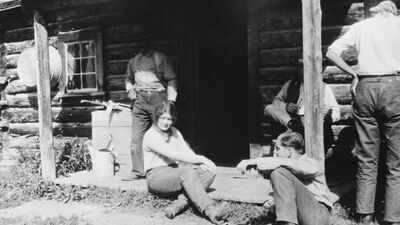
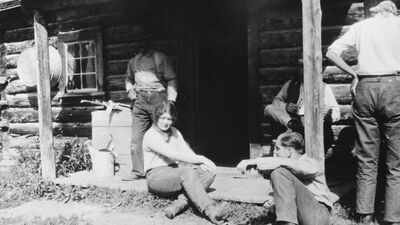
The 4 Lazy F Ranch sits on the west bank of the Snake River in Wyoming, just north of the Grand Teton National Park headquarters in Moose. Below the Teton Range, the ranch preserves a part of the area’s homestead and dude ranch history.The property was first known as the Sun Star Ranch. Bryant Mears filed a claim for a 160-acre homestead in 1914 after arriving in Jackson Hole as a dude at the Bar BC Ranch, according to History Jackson Hole. He later served in the US Army during the First World War before returning to the valley with his wife.Mears received his homestead patent in 1921, but he had already transferred the property to Edward Mears. Edward later sold it to William and Margaretta Frew in 1927. The family renamed it the 4 Lazy F Ranch, a name based on the ‘four Frews’- William, Margaretta and their two daughters, Margaretta ‘Peggy’ and Emily.For the Frews, the property initially served as a summer retreat. They built the main lodge and sleeping cabins, along with other structures that helped shape the ranch. The layout followed a style associated with Rocky Mountain dude ranches, with the main lodge at the centre and sleeping cabins arranged around it.
From family retreat to dude ranch
The Frew family made few additions to the property between 1927 and 1949. That changed after William Frew died in 1948 and Margaretta Frew died in 1949. Emily Frew Oliver inherited the ranch and decided to open it to paying guests in 1950.Emily and her husband, Henry Oliver Jr, ran the ranch together. Henry looked after outdoor activities, including pack and fishing trips, while Emily managed the cooking and cleaning staff. She also made sure meals were prepared for both guests and staff.The ranch offered a different type of stay from many dude ranches in the valley. While a typical dude ranch stay was around two weeks, the 4 Lazy F accepted visitors for anything from an overnight stay to several weeks. A Union Pacific Railroad guide from around 1960 advertised rooms with meals, riding, swimming, fishing and pack trips to Yellowstone National Park.The ranch continued to retain much of its earlier character even as it operated for guests. Its main lodge served as the living and dining area, with a large central living room and fireplace. Sleeping cabins surrounded the lodge and created a communal area for guests. Irrigation ditches built during the earlier ranching period remained on the property, although they are no longer used.
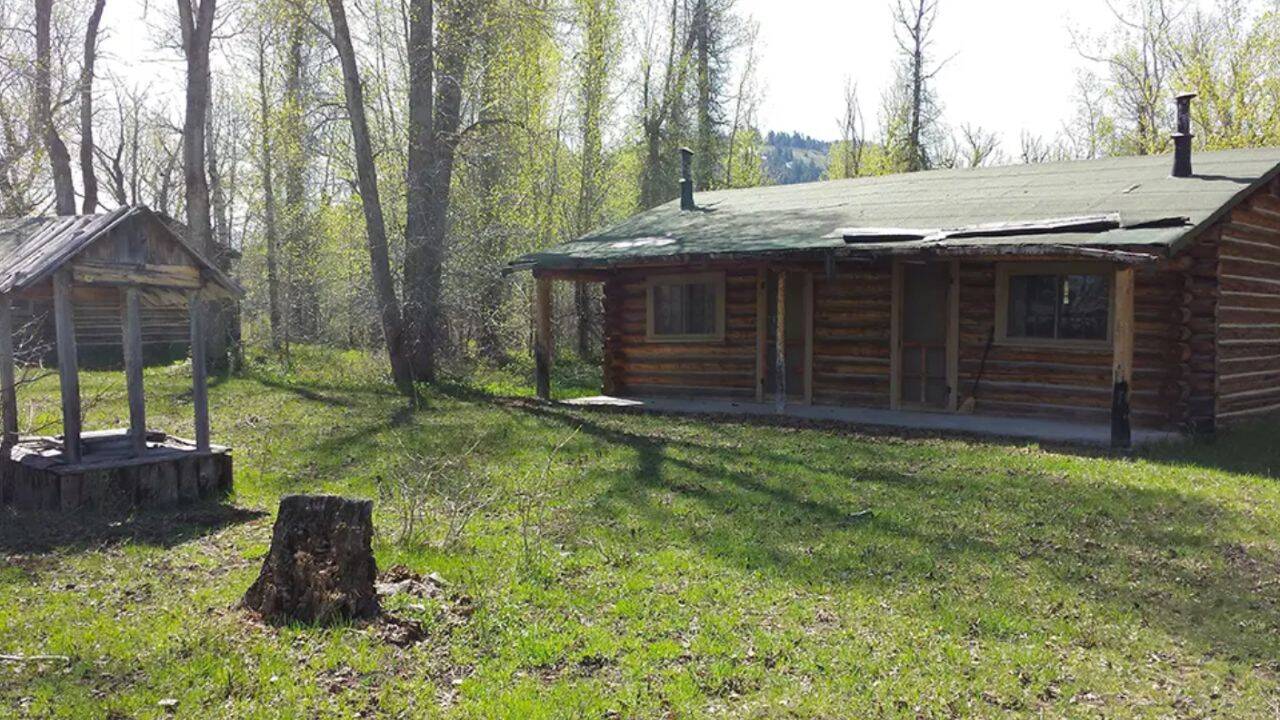
The ranch’s historic remains include the lodge, sleeping cabins, caretaker’s cabin, barn and other outbuildings. (NPS photo)
Property largely unchanged
The Olivers also continued the ranch’s agricultural activities. They kept milk cows, work horses, saddle horses, hogs and chickens. The family cultivated and irrigated land for winter feed but made few other changes to the landscape.The property’s natural appearance was part of its character. The lawn outside the main lodge was one of the main areas that was altered. It was first irrigated and flooded to keep the grass green, before the Olivers later installed a sprinkler system.As the ranch developed, some new buildings were added. A sleeping cabin and casting pond were constructed in 1952. Another cabin was moved from the Circle H Ranch in 1954, while the River Cabin was moved to the property in 1961. In 1964, a new cabin was built and parts of the caretaker’s cabin were modified.The ranch remained closely tied to the Oliver family. After Henry Oliver Jr died in 1977, their oldest son, Harry, helped Emily maintain and run the property. From 1977 to 2005, he spent every May through October at the ranch, overseeing operations and general maintenance.
The 1967 sale to National Park
In 1967, Emily Frew Oliver sold the 4 Lazy F Ranch to the federal government. However, she reserved a life estate, allowing her to retain her rights to the property during her lifetime.The sale marked a major change in ownership, but it did not immediately end the family’s connection with the ranch. The Olivers continued to use and maintain the property for decades. The ranch formally stopped accepting paying guests during the 1990s.Emily Oliver eventually decided to voluntarily terminate her life estate. In 2006, she gave up the remaining rights and turned over management of the 4 Lazy F Ranch to the National Park Service.Today, the 4 Lazy F Ranch is vacant while the National Park Service evaluates possible future uses for the property. Its historic buildings remain, including the lodge, sleeping cabins, caretaker’s cabin, barn and other outbuildings.Several landscape features also survive. The lawn and ornamental plantings can still be seen, while native vegetation remains around the lodge and caretaker’s house. The irrigation ditches are also still visible across the property.