







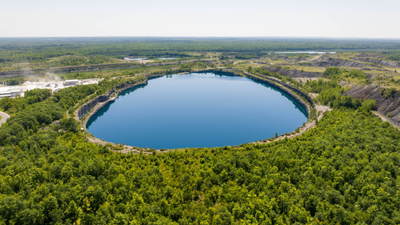
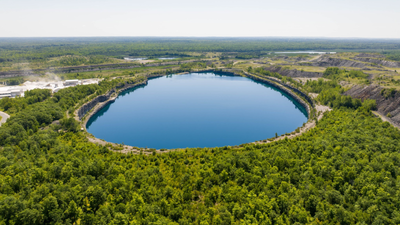
Thirty-three years after local authorities took control of thousands of acres of damaged land, a former mining centre in central Minnesota has completed one of the Midwest’s most striking ecological transformations. The Minnesota Department of Natural Resources (MN DNR) established the Cuyuna Country State Recreation Area in 1993, taking over 5,000 acres of abandoned iron mines and 15 flooded open pits. According to state records published in Minnesota Conservation Volunteer magazine, the former industrial site is now a major recreation area with more than 50 miles of singletrack mountain bike trails and 25 miles of natural, undeveloped shoreline.
From mining site to recovering landscape
From 1900 to the early 1980s, the Cuyuna Iron Range was a major industrial mining area. When mining stopped, companies left behind huge open pits, piles of red earth and old, damaged infrastructure. The unfenced land was also exposed to erosion and safety problems. Over the years, groundwater and rainwater slowly filled the deep mine pits. Fifteen of them became deep, clear lakes, some reaching depths of up to 525 feet. Portsmouth Mine Pit Lake, within the recreation area, became the deepest body of water within Minnesota’s borders. In 1993, state lawmakers and conservation groups formally created the Cuyuna Country State Recreation Area. The aim was to protect the land from commercial development and housing while restoring the landscape and protecting water quality. The Minnesota DNR developed a long-term plan to allow forests and other vegetation to recover while also opening the area to the public.
Turning old mine land into a cycling centre
The transformation into a major cycling destination began after local residents saw the potential in the unusual landscape. According to the Cuyuna Lakes Mountain Bike Crew, the International Mountain Bicycling Association (IMBA) later recognised the area as an official Ride Center. The trail system was designed around the hills and steep changes in elevation created by the old mining waste piles. The area now has several types of trails. More than 50 miles of singletrack mountain bike trails run across the red earth, with routes for beginners as well as experienced riders and downhill cyclists. The recreation area also has 7.5 miles of adaptive trails with wider routes for handcycles and adaptive mountain bikes. The 8-mile paved Cuyuna Lakes State Trail connects communities including Crosby, Ironton and Riverton. During winter, cyclists can use about 40 miles of groomed snow trails for fat biking. The Minnesota DNR says the paved state trail passes through the recreation area and gives visitors access to viewpoints overlooking the flooded mine pits.
Community efforts help revive former mining towns
Restoring the land also helped bring new life to nearby communities. Historical records from the Parks & Trails Council of Minnesota show that non-profit groups began buying land near the Croft Mine site as early as 1989 to create buffer areas and trailheads. In 1998, local residents created a regional leadership task force to improve public access and connect separate mining areas. A local coalition, including community leaders such as John Schaubach, Bill Bedard and former US Congressman James Oberstar, helped secure land easements and state funding for the growing trail system. “With purpose-built trails for beginners, intermediates and experts, riders from across the region are making the pilgrimage to a new Midwest Mecca,” the International Mountain Bicycling Association said during its evaluation of the site. The growth of outdoor tourism has also helped Crosby and Ironton. Former mining supply areas have gradually become centres for bike shops, small hotels, cafes and other businesses serving visitors.
Clear lakes offer more than cycling
Cycling is not the only attraction. The great depth of the former mine pits and the lack of fine sediment have created unusually clear lakes. Water visibility can often reach more than 30 feet, making the area popular with scuba divers from across the Midwest. The Minnesota DNR manages 25 miles of shoreline around the six natural lakes and 15 mine pit lakes within the recreation area. Anglers can fish for rainbow trout, northern pike, smallmouth bass and walleye. Visitors can also use public boat launches and kayak access points. The 25-site Portsmouth Campground provides another way to stay close to the lakes without large commercial developments along the shoreline. Under the Minnesota DNR’s management plan, the area is meant to remain largely non-commercial. Private housing and intensive timber harvesting along the water’s edge are not allowed. Today, the Cuyuna Range is a strong example of how damaged industrial land can be reclaimed. What was once a major iron-mining landscape has become a public recreation and ecological asset, with its old pits, red earth and abandoned mining terrain now supporting forests, clear lakes, wildlife and outdoor tourism.