









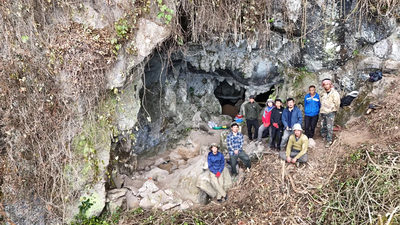
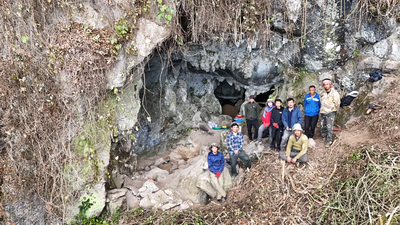
A pottery fragment sticking out of a rock shelter in Nagaland may have changed what archaeologists know about the region’s past. Archaeologists working in Noklak district have found evidence suggesting that people were living in the region around 3,500 years ago, pushing back evidence of human habitation in Nagaland by nearly 3,500 years.According to India Today NE, the discovery was made during a March 2026 archaeological expedition by a joint team from Nagaland University and the Nagaland government’s Department of Art & Culture.The find is significant because Northeast India has long remained one of the less explored parts of India’s prehistoric map. The findings have also raised a bigger question: Was Northeast India much more important in early human migration and the spread of agriculture than archaeologists had previously realised?
It started with a pottery fragment
The breakthrough came in March 2026, when archaeologists were exploring the limestone caves and rock shelters around Chiphur in Noklak. According to The Week and some media reports, the team had already spent several days surveying the difficult terrain when geoarchaeologist Dr Limasanen Longkumer noticed a piece of pottery protruding from an exposed section inside the Leilo Kaa rockshelter. Professor Tiatoshi Jamir of Nagaland University recognised that the find could be important.What followed was a careful excavation. Researchers recovered cord-marked pottery, ground stone tools, hearth features, carbonised cereal remains and animal remains. Scientific dating by Beta Analytic Laboratory in Florida using Accelerator Mass Spectrometry (AMS) placed the Leilo Kaa rockshelter at approximately 3,500 years old. Another site, Kathso Kaa, showed evidence of occupation around 1,000 years ago, according to India Today NE.For archaeologists, the importance lies in the combination of evidence. Together, these remains provide a glimpse into how people lived in the Naga Hills thousands of years ago.
Who lived in these caves?
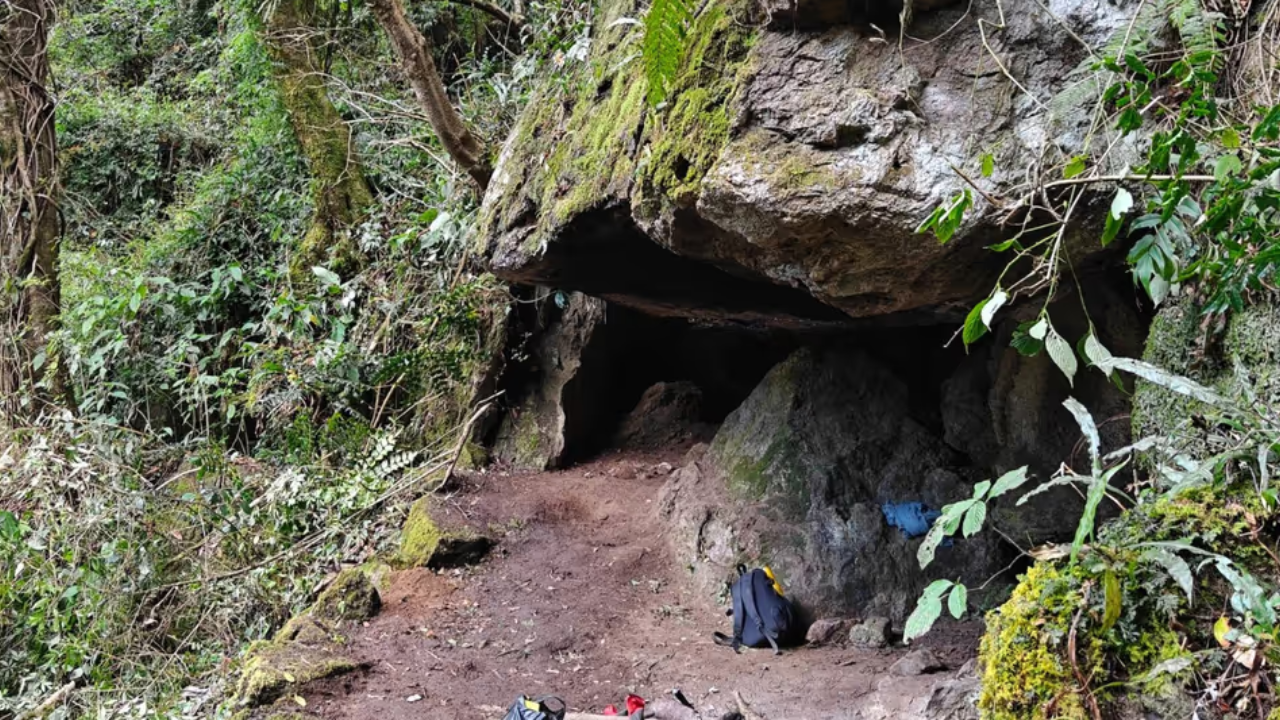
Scientific dating by Beta Analytic Laboratory in Florida placed the rockshelter at approximately 3,500 years old. (Photo credit: Nagaland Tribune)
The evidence suggests that the communities were not dependent on a single source of food. According to a report in The Week, charred remains of foxtail millet and Job’s tears were found at the site. These are crops capable of growing in mountain environments. The archaeological evidence also points to hunting, fishing, gathering and foraging.This could help researchers understand how communities in the hills gradually combined different ways of obtaining food. But archaeologists are being careful not to describe the evidence as proof of a complete transition from hunter-gathering to farming.Speaking to The Week, leading archaeologist Jamir said it was too early to draw firm conclusions. The findings instead raise questions about whether climate, changing food strategies or early domestication influenced the shift towards settled life.Animal remains are being studied to understand what people ate, while pottery containing food residues could offer further clues about how food was prepared and processed. Even the stone tools may tell part of the story, helping researchers understand the activities carried out at the sites.Northeast India was not a corner in isolation Perhaps the biggest implication of the discovery goes beyond Nagaland. The Naga Hills are part of a much larger landscape that connects the Indian subcontinent with Myanmar and Southeast Asia. The region is considered an important corridor through which people, technologies and ideas may have moved between South and Southeast Asia.According to The Week, similarities in pottery and stone-tool traditions could help researchers understand these wider cultural connections. This could change how archaeologists look at Northeast India’s place in early Asian history. The findings add archaeological evidence to the view that Northeast India was an important geographical corridor connecting South Asia and Southeast Asia.In other words, the people living in these hills may have been part of a much larger network of prehistoric communities.
Why did it take so long to find this evidence?
One reason is the landscape itself. The caves and rock shelters of Nagaland are often located in remote, mountainous areas covered by dense forests. Archaeological work is difficult and time-consuming. There is another reason: archaeology in Nagaland depends heavily on local communities.Many sites are located on community or privately owned land. Researchers therefore work closely with village councils, elders and local hunters, who often know the landscape far better than an outside archaeological team.According to The Week, young members of the Khiamniungan Naga community are also being trained in archaeological fieldwork so that local people can participate in documenting and protecting their own heritage.
Noklak may be only the beginning
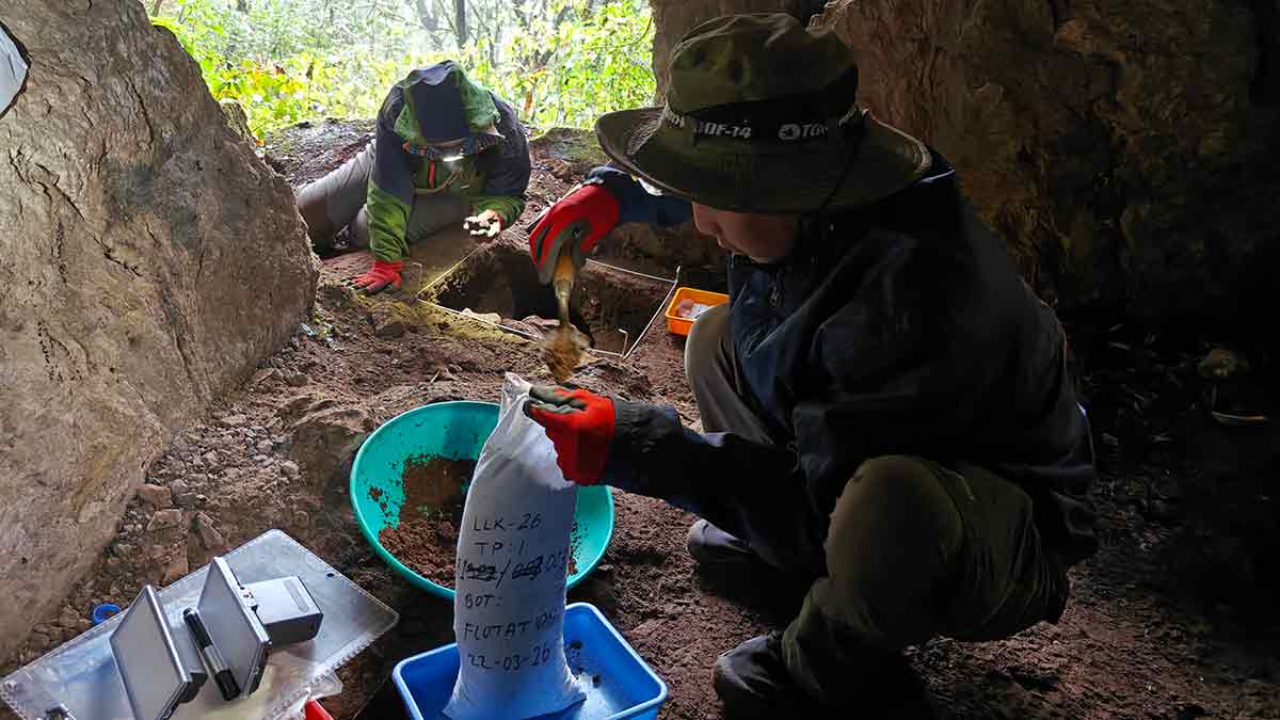
Young members of the Khiamniungan Naga community are also being trained in archaeological fieldwork. (Photo credit: The Week)
The researchers believe the discovery is part of a much larger story. Jamir, who has spent years studying prehistoric landscapes in Nagaland, told The Week that the Northeast has far greater archaeological potential than previously recognised.His team’s earlier work at cave systems in Mimi and Hakkomute had already produced evidence that could help researchers understand the emergence of pottery and agriculture in the region. The team now plans to return to several cave sites, including Mimi, Hakkomute and Phokhungri, using newer technologies such as LiDAR mapping, archaeogenetics and geoscience techniques, according to The Week.The goal is to build a clearer picture of how people lived, travelled and adapted to changing environments across Northeast India. And there may be much more waiting to be found.As India Today NE reported, a public exhibition of the excavated artefacts is planned at Nagaland’s State Museum in October.For now, the significance of Noklak can be seen in what was found inside one remote rock shelter: a piece of pottery, stone tools, ancient grains, animal remains and traces of fire. Small objects, but a big clue. They suggest that the human story of Northeast India may have begun much earlier than archaeologists once thought and that the caves of Nagaland could hold many more chapters of that story.