








When NASA launches Artemis II, the spacecraft will carry far more than a crew of four astronauts. Alongside critical systems and experiments, it will also transport a digital archive containing the names of over 5.6 million people from around the world. Collected through NASA’s “Send Your Name to the Moon” campaign, these names represent a deliberate effort to make space exploration more inclusive and participatory. At a time when humanity is preparing to return to deep space after decades, the initiative reflects a shift in how missions are framed, not just as technical achievements, but as shared milestones that connect millions of individuals to a journey beyond Earth.
How NASA’s Artemis II is engaging millions of people
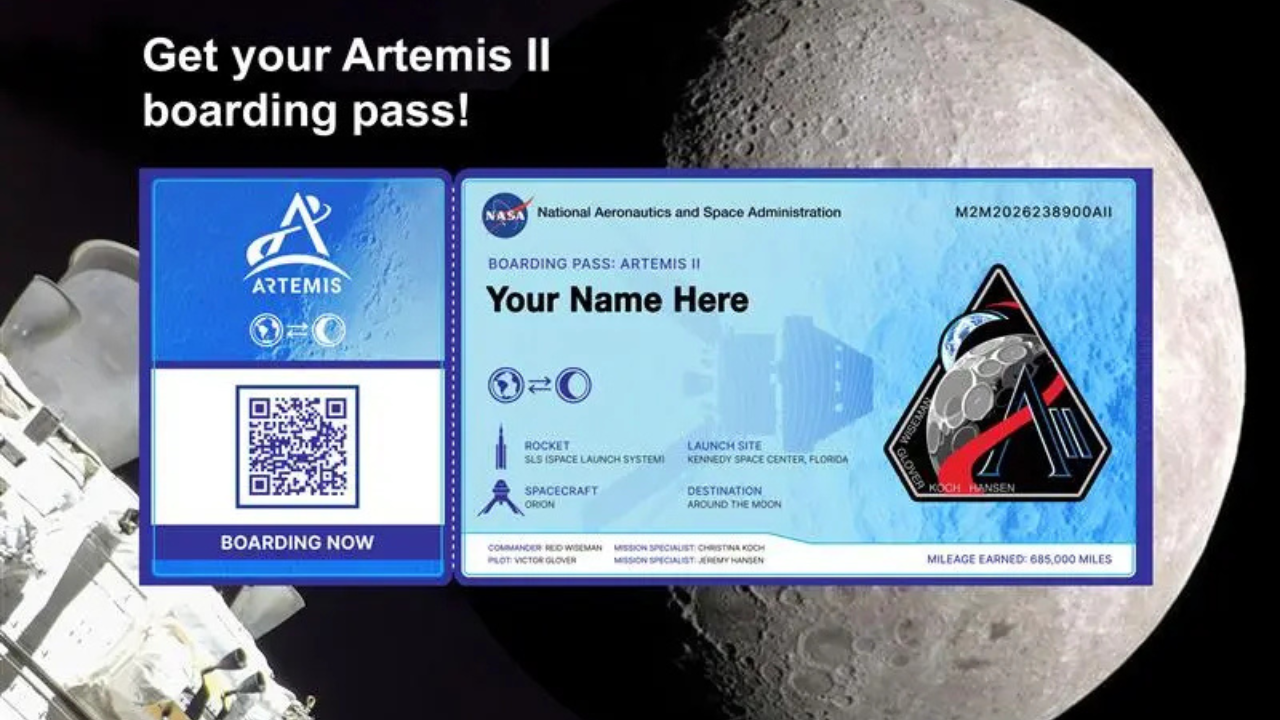
NASA’s decision to invite global participation is not merely symbolic marketing, it is part of a broader institutional approach to public engagement. The Artemis programme, unlike the Cold War-era missions, is designed to operate in a more connected and transparent world, where public involvement is both expected and strategically valuable.The “Send Your Name to the Moon” campaign opened submissions globally, allowing individuals to register their names and receive a digital boarding pass linked to Artemis II. The response was massive, with millions participating within months. While the final figure of 5.6 million reflects confirmed submissions during a specific window, the broader significance lies in the scale of engagement: it demonstrates sustained public interest in human spaceflight beyond low Earth orbit.This level of participation also mirrors similar initiatives on missions like Mars 2020 Perseverance Rover, where millions of names were etched onto microchips and sent to Mars. Artemis II builds on that legacy, but with a stronger emphasis on human presence, making the connection feel more immediate and tangible.
How NASA fits millions of names inside a spacecraft
NASA has stored the submitted names on a small SD card and placed it aboard Orion, the spacecraft that will carry astronauts on the Artemis II mission around the Moon. Orion is NASA’s deep-space crew capsule, designed to support astronauts beyond Earth’s orbit. The SD card will travel inside the spacecraft along with other mission items, while the zero-gravity indicator, Rise, will float inside the cabin once in space. The names themselves are stored digitally as simple text entries, meaning millions of names can fit easily on a tiny memory card.
What Artemis II will actually do
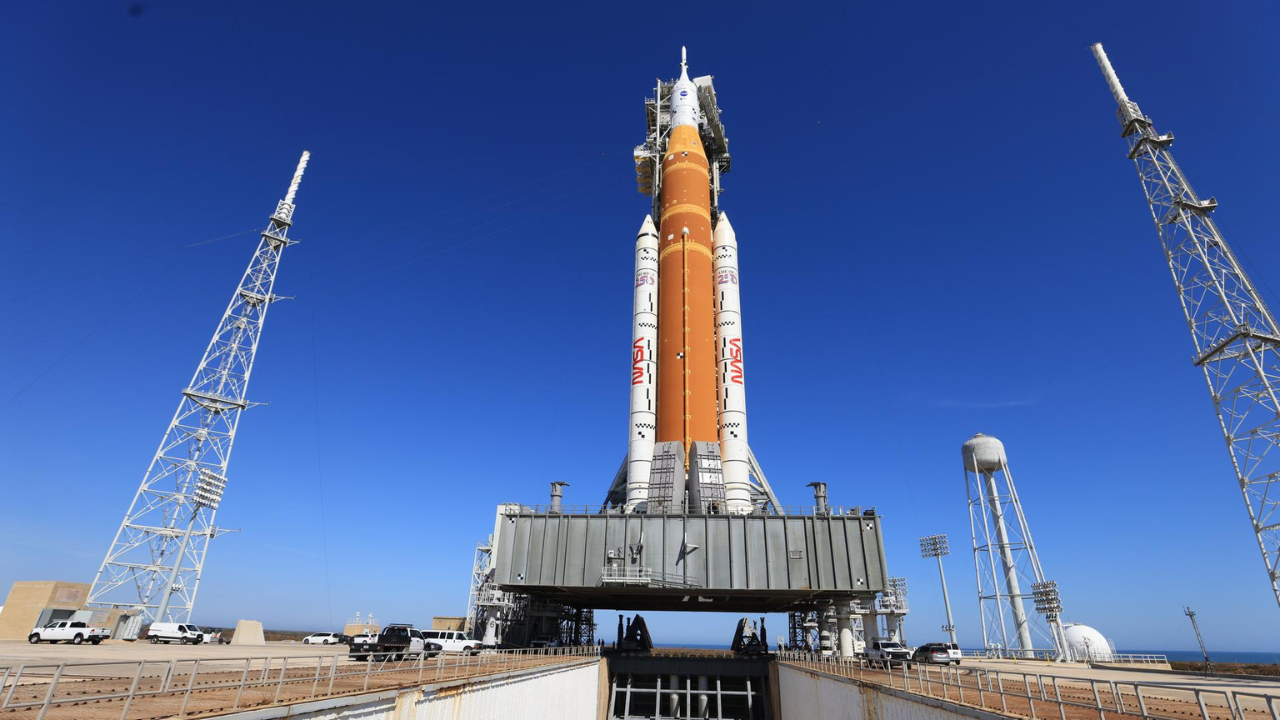
Artemis II is not a landing mission, but it is a critical step toward one. It will be the first crewed flight of NASA’s Orion spacecraft and the Space Launch System (SLS), sending astronauts on a multi-day journey that loops around the Moon before returning to Earth.The mission profile includes:
- Launch aboard the SLS rocket, the most powerful rocket currently in operation
- A trajectory that takes the crew thousands of kilometres beyond the Moon
- A high-speed re-entry into Earth’s atmosphere, testing heat shield performance under extreme conditions
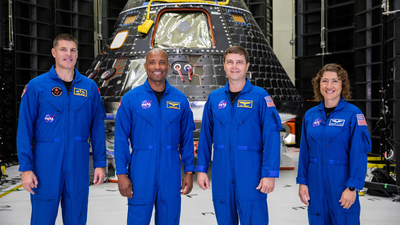
The crew, including Reid Wiseman, Victor Glover, Christina Koch, and Jeremy Hansen, will evaluate life-support systems, navigation, communication, and manual control capabilities. These tests are essential before committing astronauts to a lunar landing in future missions like Artemis III.In this context, the inclusion of millions of names transforms the flight into something more than a systems test. It becomes a symbolic rehearsal for humanity’s broader return to the Moon.
The legacy of carrying humanity beyond Earth
The idea of sending representations of humanity into space is not new. During Apollo 11, astronauts left a plaque on the lunar surface that read, “We came in peace for all mankind.” Similarly, the Voyager missions carried golden records with sounds and images from Earth, intended for any potential extraterrestrial intelligence.What has changed is the scale and accessibility of participation.Earlier missions represented humanity in a curated way, through selected artefacts and messages. Today, digital technology allows millions of individuals to be included directly. Instead of symbolic representation, missions like Artemis II enable literal participation, even if only through a name encoded in data.This shift reflects a broader transformation in space exploration from elite, state-driven programmes to globally observed and publicly engaged missions
Why this matters beyond symbolism
At first glance, sending names to the Moon may seem purely ceremonial, but it serves a larger purpose. By involving millions of people, NASA helps build long-term public support for costly space programmes, keeping interest and funding alive. It also creates a personal connection, especially for students, who may feel inspired to pursue careers in science and engineering. At the same time, the initiative reflects the global nature of the Artemis programme, which includes international partners like the European Space Agency and the Canadian Space Agency.
A mission that carries both data and meaning
While Artemis II is primarily designed to test spacecraft systems and prepare for future Moon landings, it also carries a symbolic payload, millions of names stored digitally aboard Orion. These names may have no scientific role, but they give the mission a sense of shared ownership. As the spacecraft travels around the Moon, it represents not just a technical milestone, but the collective aspirations of people worldwide, making the journey feel less distant and more human.