










For years, the Everglades was known for its tangled wetlands, alligators and an abundance of smaller mammals moving through the vegetation. Then an animal from south-east Asia began spreading through the marshes. Burmese pythons, most likely introduced through the pet trade, have established a breeding population in southern Florida and now occupy large parts of the Everglades. Their presence has coincided with an extraordinary change in some native mammal populations. Raccoons, opossums and bobcats have become far less common in areas where the snakes have been established for the longest time, while rabbits have virtually disappeared from some surveys.As reported by the American Association for the Advancement of Science (AAAS), a study based on more than 35,000 miles of surveys recorded declines of 99.3% in raccoons, 98.9% in opossums and 87.5% in bobcats since the late 1990s. The figures offer a glimpse of how one introduced predator has altered an entire wildlife community.
How Burmese pythons invaded themselves in Florida
Burmese pythons come from south-east Asia, thousands of miles from the sawgrass marshes and mangrove edges of southern Florida. Their arrival in the Everglades appears to have been tied to the exotic pet trade. Some snakes were probably released when owners could no longer manage them. Others may have escaped from captivity, including during storms and other disturbances. By the mid-1980s, there were signs that the species had begun establishing itself in the wild.That first foothold mattered because the Everglades offered conditions in which a large constrictor could survive and reproduce. Warm temperatures, extensive wetlands and abundant prey created a very different setting from a glass enclosure in someone’s home.The result is now a self-sustaining population. There is no reliable figure for how many Burmese pythons occupy the Everglades. Estimates have ranged into the hundreds of thousands, although their secretive behaviour makes any population count difficult. The snakes spend much of their time hidden among vegetation or in water, and an animal that can grow to around 12 feet is surprisingly easy to miss in such a vast landscape.
How pythons hunt in the Everglades
Burmese pythons are opportunistic hunters. They do not specialise in one particular type of animal, which is part of what makes their presence unusual in an ecosystem with a large variety of native wildlife.A python catches prey with its mouth and then wraps its muscular body around the animal. Once the prey has stopped breathing, the snake swallows it whole. There is no need to chase down another meal immediately; a large python can go for considerable periods between feeding.In Florida, its potential menu includes mammals, birds and reptiles. That range brings the snake into contact with species that evolved without having to contend with a giant constrictor as a regular predator. The concern is not limited to common animals. Pythons have also been recorded eating species of conservation interest, including the endangered Key Largo woodrat.For some animals, the problem is compounded by the fact that they have relatively few places to escape. The Everglades is vast, but suitable habitat is not necessarily safe habitat. A python can move through marshes, canals and vegetation, waiting for an opportunity rather than pursuing prey across open ground.
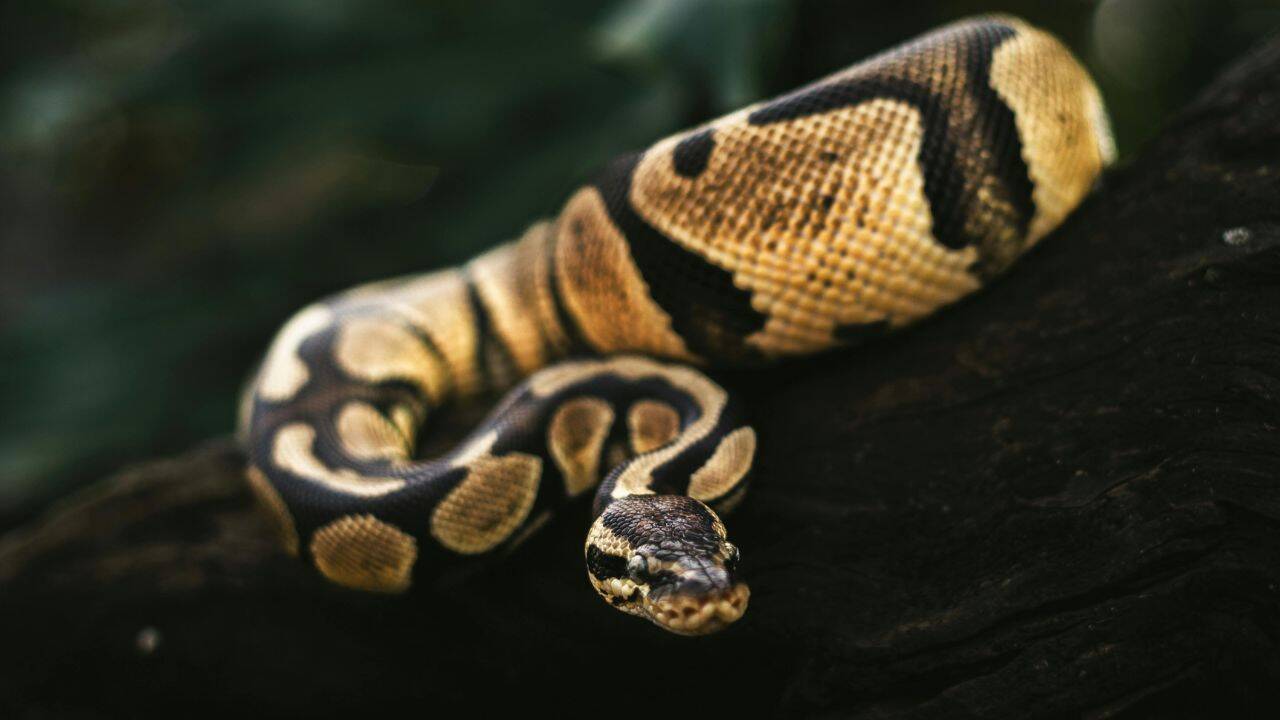
The animals once common in the Everglades grew scarce
The clearest indication of the scale of the change came from surveys carried out in Everglades National Park between 2003 and 2011, as reported by AAAS. Scientists covered more than 35,000 miles of roads and tracks, recording mammals encountered along the way. It was not a simple headcount of animals in the entire park. Instead, the repeated surveys provided a way of comparing how frequently different species appeared over time and across areas with different histories of python invasion.USGS reported, Opossum sightings had fallen by 98.9% from earlier levels. Bobcat numbers were down 87.5%, while raccoons, once among the mammals most commonly encountered in the park, had declined by 99.3%.Rabbits were more difficult to interpret because the survey recorded none in the affected areas. A later examination of marsh rabbit mortality provided another piece of the picture, linking deaths of the animals with python predation and helping explain why rabbit populations had become so difficult to find.These were not small variations from one survey year to the next. The declines represented a substantial change in the mammal community.
The wildlife decline matched the snakes’ expansion
The most severe declines occurred towards the southern end of the park, the same broad area where Burmese pythons had been present for the longest period. In places where the snakes had arrived more recently, mammal populations had not fallen to the same extent.That difference gave scientists an unusually useful comparison. If the disappearance of mammals had been caused entirely by a factor affecting the whole Everglades, such as a major change in habitat or weather, there would be less reason to expect the losses to line up so closely with the history of python establishment. Instead, the pattern followed the expanding range of the invasive snake.Areas outside the park where pythons had not been recorded also retained healthier mammal populations.The evidence could not establish that every missing animal had been killed by a python. Wildlife populations respond to many pressures, and the researchers were careful about drawing a direct cause-and-effect conclusion from the survey data alone.But the geographic pattern, the timing and the known feeding habits of the snakes pointed in the same direction.
A hidden hunter with a wide range of prey
It would be tempting to view Burmese pythons as filling the role of another large predator. The situation is more complicated than that. Native predators evolved alongside the other species in the Everglades and are part of a long-established ecological network. Burmese pythons arrived from a different continent and encountered prey that had no evolutionary history with them.Their hunting strategy also differs from that of many native predators. A large constrictor does not need to outrun an animal over long distances. It can remain concealed and strike when prey comes within reach.The snake’s ability to consume a wide range of animals means its effect is spread across several groups at once. That broad diet is particularly significant in a wetland where many mammals are already restricted to patches of suitable habitat.
The real victims are the Everglades’ native animals
The size of a Burmese python can make encounters with people unsettling, but the documented danger in the United States has largely involved captive snakes rather than wild animals.As reported by AAAS, at least nine people in the country have been killed by Burmese pythons since 1999, but those cases involved pet snakes. There has been no documented case of a wild-born Burmese python killing a person in the United States.For the Everglades, the more immediate ecological concern is what happens to the animals living around the snakes.A python does not need to attack a person to have a substantial effect on its surroundings. A raccoon disappearing from an area, a rabbit no longer appearing on a survey route, or an opossum becoming exceptionally rare may seem insignificant when considered separately. Across a large wetland, repeated losses of that kind can add up to a profound change in the animal community.
A difficult problem in a very large landscape
Removing Burmese pythons is not straightforward. The Everglades is a huge, wet and densely vegetated environment, and the snakes are exceptionally good at avoiding detection.They can remain hidden for long periods, move through water and vegetation, and occupy areas that are difficult for people to reach. Their reproductive ability also means that removing individual snakes does not necessarily prevent the population from persisting.This makes the problem different from dealing with an isolated escaped animal. The species has established itself.Florida has used organised searches, trapping efforts and public programmes to find and remove Burmese pythons. Individual captures can be significant, but the sheer scale of the invaded landscape means there is no simple way to sweep the snakes out of the Everglades.The challenge is made harder by the fact that the animals being protected are often much easier to miss than the snakes themselves.