








For most of human history, a water source containing high concentrations of arsenic would have been considered deadly. Long-term exposure to the toxic metal is linked to cancers, cardiovascular disease, diabetes and neurological disorders. Yet for thousands of years, people living in Chile’s Atacama Desert have relied on groundwater containing some of the highest naturally occurring arsenic levels ever recorded.The mystery has puzzled scientists for decades. How could entire communities survive for nearly 7,000 years without the public health crises normally associated with chronic arsenic poisoning? A study titled ‘Human adaptation to arsenic in Andean populations of the Atacama Desert’ by Mario Apata, Bernardo Arriaza, Elena Llop and Mauricio Moraga offers a compelling answer. Their research suggests that natural selection favoured genetic variants that help the body process and eliminate arsenic more efficiently, making the people of northern Chile one of the clearest known examples of humans adapting to an extremely toxic environment.
Why the Atacama Desert contains some of the world’s highest natural arsenic levels
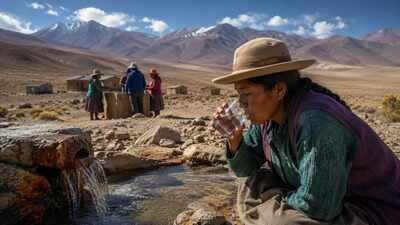
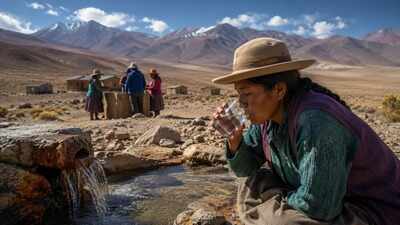
The Atacama Desert in northern Chile is often described as the driest non-polar desert on Earth, but it is also one of the most geologically unusual.Volcanic activity over millions of years has released naturally occurring arsenic into groundwater, rivers and springs throughout the region. In Quebrada Camarones, where the study was conducted, arsenic concentrations exceed 1,000 micrograms per litre (µg/L), among the highest levels recorded anywhere in the Americas.For comparison, the World Health Organisation recommends a maximum arsenic concentration of 10 µg/L in drinking water. The water consumed by the Camarones population therefore contains arsenic levels more than 100 times higher than the modern guideline.Despite this extraordinary exposure, the region has not experienced the devastating epidemiological emergencies scientists would normally expect from such prolonged contact with arsenic.
How scientists discovered protective genes that help Andean populations detoxify arsenic
To solve this long-standing mystery, researchers compared the DNA of people from three regions of Chile with different histories of arsenic exposure.Mario Apata and his colleagues analysed genetic samples from 50 people in Quebrada Camarones, 47 from the Azapa Valley and 45 from San Juan de la Costa in southern Chile.The team focused on a gene called AS3MT, which helps the body break down and remove arsenic. They looked for four protective versions of this gene that are known to help people process the toxic metal more efficiently.By comparing how common these protective gene variants were in each population, the researchers hoped to find out whether thousands of years of living with arsenic-contaminated water had influenced human evolution.
Why the people of Quebrada Camarones carry more arsenic-protective gene variants
The results showed a clear pattern. People from Quebrada Camarones, who have lived with arsenic-rich drinking water for thousands of years, were much more likely to carry protective versions of the AS3MT gene than people from areas where arsenic levels are much lower.One protective combination of these gene variants, called the CTTA haplotype, was found in 68% of people from Camarones. In comparison, it appeared in 48% of people from the nearby Azapa Valley and just 8% of people from San Juan de la Costa, where drinking water has historically contained far less arsenic.The researchers also found that a gene variant linked to greater sensitivity to arsenic, known as the C variant of Met287Thr, was extremely rare in Camarones, appearing in only 1% of the population, but was more common in the other two groups.According to the researchers, these findings suggest that thousands of years of drinking naturally arsenic-contaminated water gradually favoured people with genes that could remove arsenic more efficiently, allowing those protective gene variants to become much more common over generations.
How 7,000 years of natural selection helped humans survive a toxic environment
The study provides one of the clearest examples of natural selection acting on modern human populations. Rather than developing immunity to arsenic itself, generations of people carrying gene variants that processed arsenic more efficiently were more likely to survive, remain healthy and pass those advantageous genes to their children.Over approximately 7,000 years, these beneficial variants became increasingly common within the population. As Apata, Arriaza, Llop and Moraga conclude, the high frequency of protective AS3MT variants in northern Chile indicates that efficient arsenic metabolism was likely selected as an adaptive mechanism, enabling communities to survive in an environment where safe drinking water was virtually unavailable.The findings demonstrate that human evolution is not confined to the distant past, it can continue wherever environmental pressures persist over many generations.
Why the Atacama study changes scientists’ understanding of human evolution
The discovery extends far beyond arsenic alone. Scientists have long documented human adaptations to extreme conditions, including high-altitude living in the Andes and Himalayas, lactose tolerance in pastoral societies and resistance to certain infectious diseases.The Atacama research adds another remarkable example by showing that populations can also adapt genetically to long-term exposure to environmental toxins.Instead of relying solely on cultural solutions, such as changing water sources or treatment methods, which were unavailable thousands of years ago, these communities gradually evolved biological mechanisms that reduced arsenic’s harmful effects.It is one of the strongest pieces of evidence that environmental pollution occurring naturally can shape the human genome over evolutionary timescales.
Why the people of the Atacama Desert remain one of humanity’s most extraordinary evolutionary stories
For most of the world, water containing more than 1,000 µg/L of arsenic would represent a severe public health emergency.For the people of Quebrada Camarones, it became an evolutionary challenge spanning millennia.Their story illustrates the extraordinary ability of humans to adapt to some of Earth’s harshest environments, not through sudden changes, but through countless generations of natural selection favouring traits that improved survival.The descendants of these ancient Andean communities still carry the genetic signatures of that long struggle today, offering scientists a rare glimpse into evolution in action and demonstrating that the human body can sometimes adapt to environments once thought impossible to survive.