





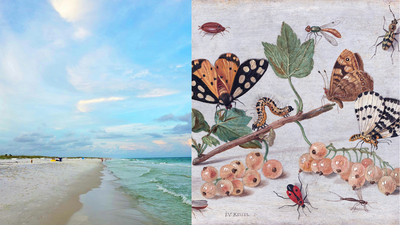
Imagine erasing almost every insect and small animal from an island, then watching nature rebuild itself from scratch. That was exactly what a team of ecologists did in the Florida Keys during one of the most influential ecological experiments ever conducted. In 1966, researchers enclosed tiny mangrove islands in enormous plastic tents and fumigated them to remove nearly all arthropods, including insects, spiders and other small invertebrates. Rather than creating permanent devastation, the experiment became a rare opportunity to observe how wildlife recolonises empty habitats in real time. The results fundamentally changed scientists’ understanding of island ecosystems and continue to influence conservation strategies for fragmented habitats around the world.
Scientists turned tiny mangrove islands into natural laboratories
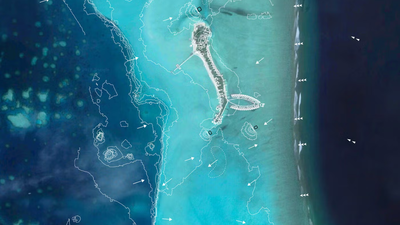
The ambitious field experiment was carried out by ecologists Daniel Simberloff and Edward O. Wilson, who wanted to test the newly proposed Theory of Island Biogeography.Their study titled ‘Experimental Zoogeography of Islands: The Colonisation of Empty Islands’ mentions several small mangrove islands in the Florida Keys, each isolated enough to function as a natural ecological laboratory. Before beginning, the researchers carefully surveyed every island, documenting the diversity and abundance of insects, spiders, mites and other arthropods already living there.Each island was then completely enclosed beneath a giant plastic tent before being fumigated with methyl bromide, eliminating almost all terrestrial arthropods while leaving the mangrove trees themselves largely unharmed. The islands effectively became blank ecological slates, allowing scientists to observe exactly how animal communities rebuilt over time.
Wildlife returned far faster than scientists expected
The researchers repeatedly visited the islands over the following months, carefully recording every species that arrived. Within days, flying insects began colonising the empty islands. Spiders dispersed across open water by releasing strands of silk into the wind, a behaviour known as ballooning, while other species arrived by flight or floating vegetation.Although the earliest colonisers differed from the original communities, the number of species steadily increased until each island approached a level remarkably similar to that recorded before fumigation.The recovery showed that species were not returning randomly. Instead, immigration and local extinction gradually balanced one another, producing a relatively stable number of species despite continual changes in which individual species occupied the islands.
The experiment provided powerful evidence for the theory of island biogeography
The findings offered one of the first direct experimental tests of the Theory of Island Biogeography, developed by Robert H. MacArthur and Edward O. Wilson.The theory proposed that the number of species living on an island is determined by a dynamic balance between new species arriving and existing species disappearing. Islands closer to larger landmasses should receive more immigrants, while smaller islands should experience higher extinction rates because they support fewer individuals and habitats.The Florida experiment demonstrated that ecological communities are not fixed collections of species. Instead, they remain dynamic systems in which the total number of species can stay relatively constant even as individual species continually come and go.This concept became known as faunistic equilibrium, transforming how ecologists viewed biodiversity and community assembly.
The experiment still shapes conservation decades later
Although the fumigation study took place nearly 60 years ago, its influence extends far beyond island ecology. Today, conservation biologists apply the same principles when managing fragmented forests, isolated wetlands and protected reserves separated by roads, agriculture or urban development. Habitat fragments often behave like ecological islands, where the movement of species between isolated patches determines long-term biodiversity.The experiment also highlighted the importance of ecological connectivity. Even small patches of habitat can recover if nearby source populations remain intact and organisms are able to disperse between them.By deliberately removing nearly all animal life from a handful of tiny mangrove islands, Simberloff and Wilson created one of ecology’s most famous natural experiments. What initially appeared to be an act of destruction ultimately revealed one of nature’s most remarkable abilities: even after severe disturbance, ecosystems possess an extraordinary capacity to rebuild themselves when the conditions for recovery remain in place.