








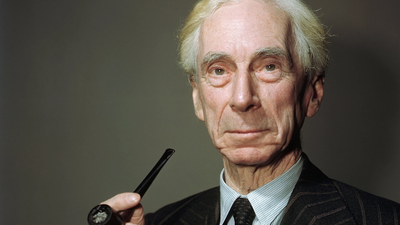
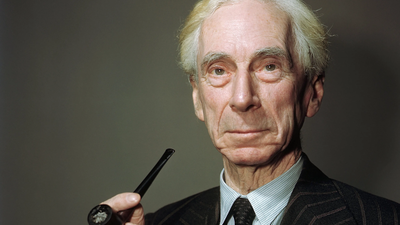
Walk into a crowded coffee shop or scroll through social media, and you will quickly spot a familiar ritual. A heavy paperbound volume of James Joyce’s Ulysses or David Foster Wallace’s Infinite Jest lies open on a small wooden table. Its owner glances around, sips an espresso, and leaves the spine clearly visible to passersby.“There are two motives for reading a book; one, that you enjoy it; the other, that you can boast about it,” wrote British philosopher Bertrand Russell in his 1930 book The Conquest of Happiness.Russell captured a quiet truth about human behaviour. Reading serves two completely different masters: private satisfaction and public status. While we like to imagine that every turned page stems from pure curiosity, our desire for intellectual prestige often drives us to pick up books we have no real intention of finishing.
A philosopher’s critique of modern anxiety
Russell wrote The Conquest of Happiness during a period of massive social change in post-World War I Britain. As literacy rates climbed and mass-market publishing expanded across Europe, books became accessible consumer goods rather than rare luxuries.In a chapter titled Byronic Unhappiness, Russell analyzed how modern urban life encouraged superficial intellectualism. People bought dense philosophical treatises and classic literature not to absorb their ideas, but to signal membership in an educated upper class.Russell’s target was not reading itself. As a logician who co-wrote the three-volume mathematical landmark Principia Mathematica with Alfred North Whitehead, he valued rigorous study. Instead, he targeted the widespread anxiety caused by doing things purely for social approval. He argued that reading out of obligation or vanity turned a potentially joyful habit into exhausting performance art.
The psychology of social performance
Russell’s distinction connects directly to simple psychological ideas about human motivation.In the 1970s, psychologists Edward L. Deci and Richard M. Ryan developed Self-Determination Theory. This idea separates two types of motivation: intrinsic motivation (doing an activity simply because you enjoy it) and extrinsic motivation (doing something to gain outside rewards, attention, or status). Reading for personal fun is a classic intrinsic activity. Reading to build an impressive public reputation relies entirely on extrinsic social approval.Sociologist Pierre Bourdieu explored this same tension in his 1979 book Distinction: A Social Critique of the Judgement of Taste. Bourdieu showed how educated groups use cultural knowledge, including familiar books, classical music, and fine art, to mark subtle boundaries between social classes. Displaying a thick, challenging book serves as a silent signal of leisure time, education, and high standing.When people buy books primarily to brag about them, they fall into what social psychologist Erich Fromm called the “having mode” of existence. Instead of entering the “being mode,” which means engaging deeply with an author’s ideas and allowing those ideas to shape their worldview, they treat books as physical trophies to collect and show off.
Performative reading in the digital age
Russell’s observation hits harder today than when he published it nearly a century ago. Digital platforms have turned reading into a tracked, public performance sport.On social media platforms like Goodreads, users publicly display annual reading goals, logging 50 or 100 books a year in a race against arbitrary numbers. On Instagram and TikTok, short video creators build personal channels around carefully arranged bookshelf tours, color-coordinated book displays, and monthly reading wrap-up videos. The term “tsundoku,” which is a Japanese word for buying books and letting them pile up unread, has become a popular badge of honor online.This performative culture creates measurable changes in reading habits. Pierre Bayard, a literature professor at the University of Paris VIII, published an honest study in 2007 titled How to Talk About Books You Haven’t Read. Bayard noted that in academic and social circles, people routinely pretend to have read major classics to protect their social standing and avoid looking uneducated.When readers choose books based on what looks impressive on a digital profile, they often abandon books that offer genuine personal delight. Easy fiction, light mysteries, and graphic novels get pushed aside in favor of lengthy biographies or dense histories that sit half-read on bedside tables.
Finding the private joy in pages
When reading becomes a public performance, it loses its power to rest the mind. Trying to read books you dislike just to impress strangers turns a peaceful hobby into another source of daily stress.Russell believed that true happiness requires direct, unforced engagement with the world. Reading for genuine pleasure allows a person to lose track of time, enter new ideas, and learn without keeping score. It provides a rare quiet space where you do not need to prove anything to anyone.A room full of unread books is not a personal failure, provided those books were chosen with real curiosity rather than vanity. The true value of a personal library lies not in how impressive it looks to visitors, but in how deeply its contents belong to the reader sitting quietly in the chair.