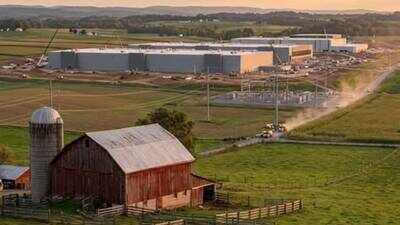








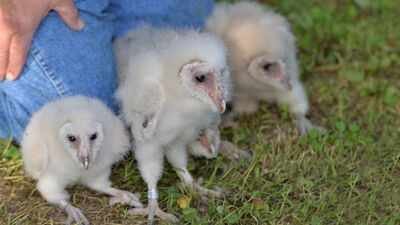
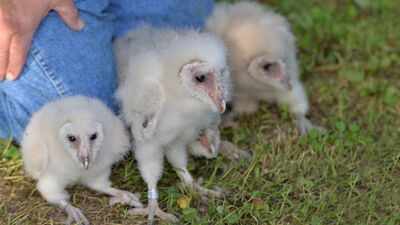
A surprise brood of six barn owlets has brought a welcome lift to a Cambridgeshire farm after a difficult summer. Discovered at Moor Farm, near Peterborough, the fluffy youngsters, estimated at 40 to 50 days old, were ringed on Thursday as part of ongoing local conservation efforts.For Moor Farm owner Judith Jacobs, the sight of the lively nest has felt like a small triumph. The farm endured a string of suspected arson attacks this year, and Jacob’s relief is palpable. “It’s very exciting as we had none last year… We try to encourage wildlife as much as we can,” she said, as per the BBC. The owls, she added, have brought a burst of life and hope to the farm at a tense time.The six owlets, three females and three males, are almost evenly spaced in age, each roughly three days apart. That detail came from Simon Dudhill, the volunteer who monitors the birds for Peterborough City Council’s barn owl recovery scheme, as per the report. Dudhill, who works with the Wildlife Conservation Partnership, said finding six owlets in one nest is “exceptionally good” and the largest brood he’s encountered so far this year.“I have ringed quite a few groups of five and four owlets this year. But this is the first brood of six I have found,” Dudhill said. He has personally ringed more than 260 owlets across Cambridgeshire in 2026, a labour of love that helps build a clearer picture of barn owl populations and movements across the county.Each Moor Farm youngster was fitted with a metal ring bearing a unique identification number from the British Trust for Ornithology. Those tiny rings do an outsized job: when birds are re-sighted or recovered, the numbers help conservationists track migration routes, survival rates and the effectiveness of local habitats. Over time, that information feeds into targeted conservation measures, such as creating safer hunting routes and placing nest boxes in suitable spots.Jacobs explained some of the practical steps she’s taken to make the farm more owl-friendly. “We have created a lot of hunting paths for the owls away from the main road, so they can hunt safely, because the biggest predators for barn owls are cars,” she said. Road collisions have long been a major threat to barn owls in the UK; giving them safer corridors to hunt small mammals reduces that risk and helps nesting pairs rear more chicks.Dudhill believes 2026 has been a stronger breeding year for barn owls than recent seasons. After monitoring these birds for 15 years, he’s noticed shifts in breeding success linked closely to food availability. “Over the last couple of years, we have seen a decline in the number of babies but not adult barn owls,” he said. “Last year we found a lot of adults in boxes but they did not breed. This is all related to food. If there isn’t enough food around, then they don’t breed.”This year, however, the story looks more positive. Dudhill said he’s seen barn owl numbers increase dramatically in many parts of Cambridgeshire, and more pairs appear to be successfully rearing chicks. Still, the picture is patchy: some areas are thriving, while others continue to show lower numbers of young owls.The practicalities of ageing and sexing the chicks were part of Thursday’s work. Dudhill measured the length of each chick’s fourth feather to estimate age. He also used feather spotting to determine sex: spotted plumage typically indicates a female, while fewer spots point to a male. These tidy, low-impact checks give conservationists the snapshot they need without disrupting the birds’ development.Despite years in the field, Dudhill said each visit still brings a buzz. “When you open a box, you have one or two or three little faces looking at you. It’s just as exciting now as the first time I opened a box,” he said. That enthusiasm is shared by Jacobs and others involved in local conservation: small interventions: nest boxes, safe hunting corridors, habitat management, can yield visible results when they’re sustained and community-supported.Moor Farm’s success story is a reminder of how local action helps wildlife recover. Whether it’s protecting habitat, reducing roadside hazards, or simply watching for signs of breeding success, the community plays a key role. For Jacobs, the owlets are more than a conservation win; they’re a reason to keep investing time and care in the land. “We try and encourage wildlife as much as we can. These birds are part of the farm,” she said.