









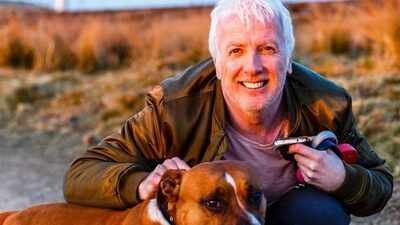
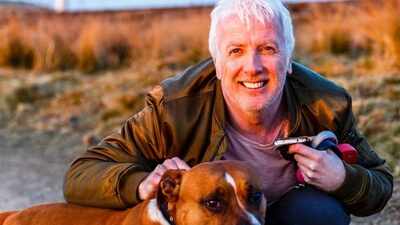
Brian Hurton, a 55-year-old man from East Kilbride, Scotland, died alone after calling 999 twice, only to be told to wait for a call back. Despite informing them that he was struggling to breathe and feared he would collapse, no ambulance was sent. By the time medical help was finally dispatched, more than three hours after his first call, it was too late. The man’s relatives are now demanding answers, saying he was left alone in his final moments despite clearly pleading for urgent help.
He called 999 twice, but he was told to wait
Brian Hurton spent the final moments of his life doing exactly what he was told to do. On 18 November 2025, Brian Hurton called Scotland’s emergency services at 17:55. He complained of breathlessness and also said he felt like he was going to collapse. The call handler told him a clinician would ring him back. If things got worse, he was to call again. The man was suffering an aortic dissection, a tear in the body’s main artery that can turn fatal within minutes if untreated.Ten minutes later, when things got worse, Brian called again. He told the call handler that he was ‘losing breath’. Once more, he was told someone would call him back.In a transcript of the exchange, later obtained by the BBC, the call handler explained that the service was ‘quite busy in the area at the moment’. “We are quite busy in the area at the moment, Brian, so based on the information provided, instead of an ambulance response initially one of our clinicians is going to call you back,” Brian was told.
Medical help was sent three hours later
The callback that Brian hoped would arrive soon came an hour and 12 minutes later, but the call was not answered. Neither were the two calls that came after that. An ambulance was not dispatched until 21:12. It reached his home at 21:19, almost three and a half hours after his first call for help. The paramedics found his front door ajar when they arrived. Brian was found lying dead on his bathroom floor.
He died ‘begging for help’
Allison Duncan learned what had happened when Brian’s twin phoned to say that Brian had died. She and her husband drove straight to the house while his body was still there. “We couldn’t believe it when we found out that Brian had made two calls and they then called him back and couldn’t get a response, and it still took them another couple of hours before they sent an ambulance out to Brian’s house,” Allison told the BBC.Allison later listened to the recordings of those calls. She described the experience as harrowing. The family cannot understand why an ambulance was not sent right away. She also added that the call handlers should have asked if someone could go to be with Brian. His twin could have been with him in seconds. She said she felt ‘very sad’ and ‘quite traumatised’ by the way her brother died. “He was left in his last dying moments on his own, struggling for breath, begging for help, thinking that he was going to get help.”
He said ‘thank you’ even though no help came
What struck Allison most was not just the delay; it was how Brian responded to being turned away a second time. After listening to the calls, she found that Brian gasped, clearly unable to believe that no help was being sent. But he said thank you and goodbye anyway. “He still said: ‘OK, thank you. Bye-bye.’ I could see it in his face – he was terrified,” she added.She said that even if Brian might not have survived when the paramedics reached him, he could have been given oxygen and pain relief to keep him comfortable. He would have felt safe and not been alone when he died.
What the review found
The family pushed for an investigation, and Healthcare Improvement Scotland carried one out. According to the review seen by BBC Scotland News, Brian’s first call should have been given a higher-priority response. If coded correctly, it would likely have brought a faster ambulance response, the review said. However, investigators could not say for certain whether that would have changed the outcome.The Scottish Ambulance Service has accepted the findings. “Due to the seriousness of this case, the Scottish Ambulance Service undertook a full Significant Adverse Event Review (SAER) rapidly, and we remained in contact with the family throughout the entire process,” a spokesperson said. “We understand that nothing can change the outcome, but we hope that our adoption of the review’s recommendations demonstrates our commitment to learning and improvement.”Scotland’s Health Secretary, Angela Constance, also said: “This should not have happened. It is clear there has been a failure in call handling.”