









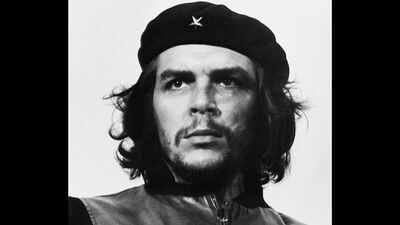
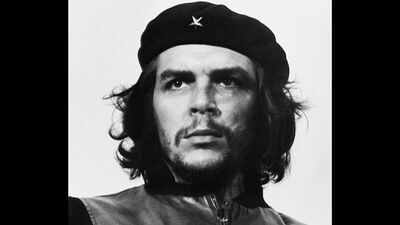
Some quotations keep sparking argument long after the person who said them is gone, not because everyone agrees with them, but because they force people to think hard about conviction, purpose and what a life is actually built on. Che Guevara‘s line sits firmly in that category: “We cannot be sure of having something to live for unless we are willing to die for it.”Taken at face value, the sentence can sound extreme. Placed against the life Guevara actually lived, it reads more as a statement about commitment than about death. He seems to be saying that the beliefs which genuinely define a person are the ones they rank above comfort, reputation or safety.Whatever anyone thinks of Guevara’s politics, the line points at a question much bigger than any one ideology. Which causes or principles matter enough that a person refuses to drop them once life gets hard. Reformers, scientists, artists, journalists and humanitarian workers have all carried on demanding work at real personal risk, and their example is close to the point Guevara is making, that meaningful change rarely arrives without some kind of sacrifice attached to it.The question has not aged out of relevance either. In a culture built around quick wins and short attention spans, the quote is really asking whether your own goals are just passing interests or something sturdy enough to survive when things get difficult. That question keeps returning across generations for a simple reason. Purpose has always demanded staying power.
Quote of the day by Che Guevara
“We cannot be sure of having something to live for unless we are willing to die for it.”
What is the meaning behind the quote by Che Guevara
At its core, this is a quote about commitment rather than death. Guevara is arguing that people find out what actually matters to them only once they identify something they are not willing to compromise on. Willingness to sacrifice, whether that means time, comfort, money or safety, shows the real depth of a conviction. Without that willingness, a stated belief is closer to a pleasant opinion than a genuine value.This is not an argument for violence or self-destruction. It is about the link between purpose and sacrifice. A scientist gives up years to reach one discovery. An athlete gives up leisure time to prepare for competition. Parents regularly give up their own ambitions for their children’s future. Each case shows the same pattern; the size of the sacrifice reveals how much the goal was actually worth to the person making it.Seen this way, the quote is less about dramatic action and more about staying loyal to a value once holding it actually costs something.
A life shaped by revolutionary ideals
Guevara remains one of the most recognisable and most divisive figures of the twentieth century. Born in Argentina in 1928, he trained as a doctor before travelling widely across Latin America. Those journeys exposed him to poverty and political instability that shaped his worldview for the rest of his life.Meeting Fidel Castro in Mexico eventually drew him into the Cuban Revolution, where he became one of its most senior figures. After the revolution succeeded in 1959, he held several roles in the new Cuban government, including running the national bank, before leaving to support revolutionary movements elsewhere. He was captured and executed in Bolivia in 1967 while trying to organise another guerrilla campaign there.Supporters see Guevara as a symbol of commitment to social justice. Critics point to his direct involvement in armed revolution, including his own record of ordering executions, as reason to view him far more critically. Both readings sit alongside the same historical record, which is exactly why his words are usually better read in context rather than lifted out as a general moral instruction.
Conviction has shaped history in many different ways
The idea behind the quote reaches well beyond revolutionary politics. History includes plenty of people who committed themselves fully to causes they believed mattered. Scientists have pursued discoveries through decades of failed attempts. Civil rights leaders accepted imprisonment rather than give up their principles. Journalists have kept reporting from active conflict zones at real risk to themselves. Medical workers have repeatedly put themselves in danger during epidemics because they judged protecting others as more important than their own safety.These examples differ enormously in purpose and method, but they share one thing. Lasting achievement usually asks for real sacrifice, not just enthusiasm.That is the distinction the quote is really drawing, between temporary motivation, which tends to fade the moment things get hard, and genuine conviction, which tends to hold steady precisely because it was already tested by difficulty.
Purpose is tested when life becomes difficult
It is easy to talk about values when life is comfortable. What actually reveals commitment is what happens once those values start to cost something.A teacher in an underfunded school keeps showing up despite limited resources. A researcher spends years studying a remote subject with little recognition. Volunteers turn up to disaster zones without expecting thanks or payment. None of these people are likely to become famous, yet each one is living out exactly the principle in Guevara’s quote.Purpose shows itself through persistence, not through what someone says about their goals. Modern life often rewards visible, immediate results and skips past the years of unglamorous effort behind them. Guevara’s line pushes in the opposite direction, arguing that meaningful work is rarely fast, and that patience through setbacks is usually where real purpose gets proven.
Other famous quotes by Che Guevara
- “At the risk of seeming ridiculous, let me say that the true revolutionary is guided by a great feeling of love.”
- “Silence is argument carried out by other means.”
- “If you tremble with indignation at every injustice, then you are a comrade of mine.”
- “The revolution is not an apple that falls when it is ripe. You have to make it fall.”
- “I am not a liberator. Liberators do not exist. The people liberate themselves.”
A quote that continues to invite reflection
This line stays memorable not because it gives an easy answer, but because it asks a hard question. Is a meaningful life built on comfort and security, or on staying loyal to principles even when that loyalty carries a real cost. Different readers will land in different places on that question, and plenty admire Guevara’s personal conviction while rejecting his politics entirely.The lasting point is fairly simple regardless of where anyone lands on Guevara himself. Meaningful lives are rarely built on convenience. Every generation includes people who commit fully to science, education, humanitarian work or public service because they judge those pursuits worth the cost. More than half a century after Guevara’s death, the question his quote raises, whether your own stated values would survive real difficulty, has not gone anywhere.