









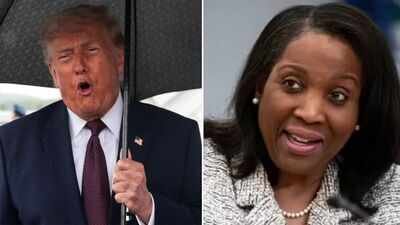
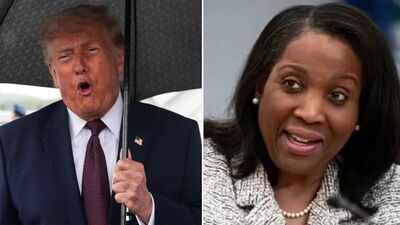
US Supreme Court on Monday upheld President Donald Trump’s authority to remove the heads of most independent federal agencies, while making a key exception for the Federal Reserve. The landmark ruling, which significantly expands presidential powers, is being seen as one of the most consequential decisions on executive authority in decades.The court allowed Federal Reserve Governor Lisa Cook to remain in her position while she challenges Trump’s attempt to dismiss her over allegations of mortgage fraud, which she has denied. However, the ruling effectively gives presidents broad authority to remove leaders of most independent federal agencies, overturning decades of legal precedent that limited executive power.Supreme Court overturns decades-old precedentIn a decision backed by the court’s six conservative justices, the nine-member bench overturned its 91-year-old ruling in Humphrey’s Executor, which had restricted a president’s ability to remove members of independent agencies without cause.“We hold that such protection from removal is contrary to the separation of powers enshrined in the Constitution,” Chief Justice John Roberts wrote for the majority.The ruling came in the case of former Federal Trade Commission member Rebecca Slaughter, who was dismissed by Trump despite federal law requiring a valid reason for such removals.The decision is expected to affect several independent agencies, including the National Labor Relations Board, the Merit Systems Protection Board and the Consumer Product Safety Commission, where Trump has also removed officials, the Associated Press reported.Trump welcomed the ruling in a post on Truth Social, writing: “It is such an Honor to be the sitting President who won this Historic and Unprecedented Ruling, one of the most important ever given with respect to Presidential Powers.”Federal Reserve remains protectedIn a separate 5-4 ruling, the Supreme Court declined to immediately remove Federal Reserve Governor Lisa Cook from office while her legal challenge proceeds, the Associated Press reported.Chief Justice Roberts, joined by Justice Brett Kavanaugh and the court’s three liberal justices, said allowing Cook’s removal would effectively eliminate statutory protections for Federal Reserve governors.“Would allow the President to remove a member of the Federal Reserve at any time, for any reason, without any notice before, and without any judicial check after. That would turn for-cause protection into little more than at-will employment,” Roberts wrote.Cook, who was appointed to the Federal Reserve Board by former President Joe Biden, will remain in office while the case continues through the courts.Justice Sonia Sotomayor, delivering a dissent from the bench, warned that the ruling could have far-reaching consequences for American democracy.“The president, to be sure, emerges with more power than ever before. That power was given to him by six justices on this court, not the people or the Constitution,” Sotomayor said. She added that the decision could lead to “submission, instability, and even oppression.”Trump-Fed confrontation intensifiesThe case involving Cook has drawn intense attention because of Trump’s repeated criticism of the Federal Reserve and its interest rate policies.Trump had also threatened to remove former Federal Reserve Chair Jerome Powell after his term as chairman ended in May, although Powell has remained on the Fed’s Board of Governors while Kevin Warsh took over as chairman.Critics have argued that Trump’s effort to remove Cook was aimed at gaining greater influence over US monetary policy. If successful, Trump could appoint a replacement and secure a majority on the Federal Reserve’s governing board.Cook rejected allegations that her dismissal was related to mortgage paperwork discrepancies.“It was an attempt to remove me on a manufactured pretext because I refused to bow to political pressure and continued to set interest rates based only on what would best serve the American people. That is the most fundamental obligation of a Federal Reserve governor,” she said in a statement.The case against Cook stems from allegations that she listed properties in Michigan and Georgia as “primary residences” in mortgage applications filed in 2021, before joining the Federal Reserve.US Solicitor General D John Sauer argued that the applications reflected “gross negligence at best” and justified Trump’s decision to remove her. Cook has denied any wrongdoing and has not been charged with any crime.