








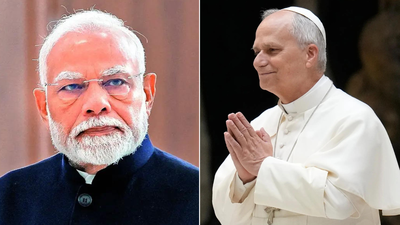
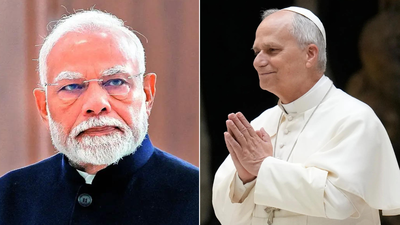
NEW DELHI: As govts and technology companies across the world race to dominate the AI revolution, a parallel global debate is steadily gaining ground – who will ensure that AI remains accountable to human values rather than being driven solely by profit, speed and geopolitical competition? That broader concern now appears to connect two very different personalities: PM Narendra Modi and Pope Leo XIV.In a sweeping encyclical on the future of AI, Pope Leo XIV warned against reducing human beings to “data and performance” and cautioned that technology should not become an instrument of domination, exclusion or dehumanisation.Months before, Modi, speaking at AI Summit in Delhi, had argued technology must “serve humanity, not replace it” and called for AI systems that are human-centric, ethical, trusted and inclusive. He has since reiterated his pitch for human-centric AI and for not allowing human agency to be overwhelmed by dizzying breakthroughs.Both, despite speaking from very different institutional and ideological spaces, have increasingly framed AI as a question not just of innovation, but of human dignity, accountability and public welfare.Modi had argued the key challenge before policymakers was to ensure AI remained “human-centric rather than machine-centric”. He also called for international frameworks built around safety and safeguards against misuse.The Vatican document raises similar concerns about concentration of tech power, algorithmic bias and unequal access to AI. It warns that if tech and computing resources remain concentrated in the hands of a few corporations or countries, existing inequalities could deepen further.The overlap reflects how global AI conversation is shifting beyond questions of technological capability and market dominance towards ethics, accountability, inequality and public welfare.The convergence is notable because it reflects an emerging international consensus that AI governance cannot remain limited to technology companies or strategic rivalries among major powers alone.As AI systems become more deeply embedded in everyday life, the debate is no longer only about how fast the technology develops, but also about who shapes its rules, priorities and ethical boundaries.