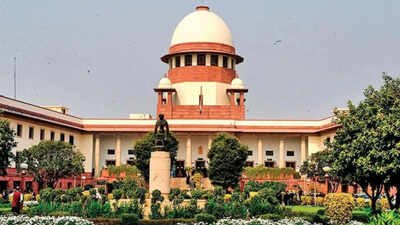








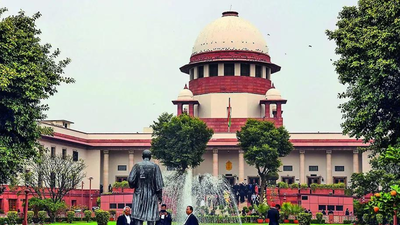
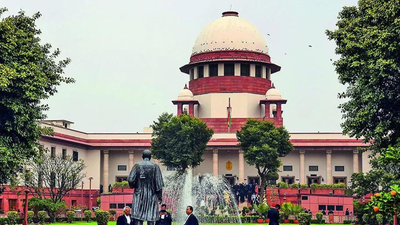
NEW DELHI: A rationalist organisation raised eyebrows in the Supreme Court by asserting that Article 25 of the Constitution, which guarantees freedom of conscience and right to freely profess, practice and propagate religion, permits a person to wake up as a Hindu, have lunch as a Muslim and go to sleep as a Christian.Arguing for rationalists Hamid Dabholkar and Nandini Jadhav, office bearers of Maharashtra Andhashraddha Nirmoolan Samiti, senior advocate Sanjay Hegde told a nine-judge bench led by CJI Surya Kant that every person as per his conscience can profess and practice any religion at any given time of a day.Justice Ahsanuddin Amanullah termed that such an interpretation of Article 25(1) could lead to an absurdity as a person can say I am a Muslim but would become a Hindu to enter a temple to worship a deity at a given time of the day.“Can one profess Islam, practice Hinduism and propagate Christianity all at once? It is a dangerous proposition,” Justice Amanullah said. Undeterred, Hegde said if the place of worship is kept out, then a person in exercise of his right to freedom of conscience can do this.Hegde said God does not discriminate and cited a folklore about how devotion of a Muslim – ‘Bhakta Salabega’ – stalled the march of Lord Jagannath’s chariot after he was denied permission to participate in the annual Rath Yatra. Justice B V Nagarathna said, “The morale of these stories is the unqualified devotion of the person. Can a non-devotee challenge the validity of a religious practice or custom?”Hegde said, “Tradition cannot trump the Constitution. A rationalist holds that reason is the proper test of belief… He rejects the proposition that what is old must be true, and that what is sacred must be exempt from inquiry. The Constitution protects religious autonomy in matters that are intrinsically religious – doctrine, rite, ceremony – but not in matters that are secular though associated with religion.”Supporting the SC’s 2018 judgment, which quashed the restriction on entry of women in the 10-50 age bracket into Sabarimala Ayyappa temple, Hegde said a denomination cannot continue with a practice that is per se discriminatory towards women in their prime years.“Where the equal worship right of an individual under Article 25(1) collides with a denomination’s claim of exclusion under Article 26(b), the individual right prevails. Article 25(1) is in terms made ‘equally’ available to ‘all persons’,” he said.