








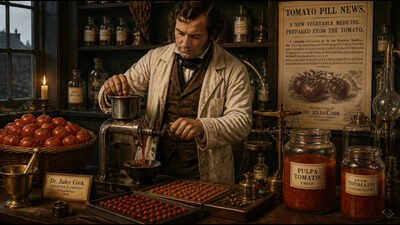
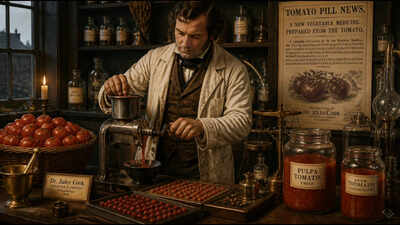
Let’s be honest, everyone knows someone who puts ketchup on absolutely everything. Pastas, pizzas and whatnot. We have all thought that those people need some medicine. Well, what if I told you that, in the 1830s, tomatoes were actually being promoted as medicine, and people were even encouraged to consume them in the form of ketchup?Believe it or not, there was a time when tomatoes were not just any other ingredient in your kitchen but were being promoted as a remedy for several health problems. In the 1830s, an American physician made some rather extraordinary claims about the humble tomato, suggesting that it could help treat digestive problems like indigestion and even diarrhoea. What followed was an unusual medical craze, with tomato extracts being turned into pills and sold to people across the country. An ordinary vegetable had suddenly become a supposed miracle remedy, and before long, competing manufacturers were making a business out of it.But how did a simple tomato become America’s latest medical obsession?
When doctors started prescribing tomatoes instead of medicine
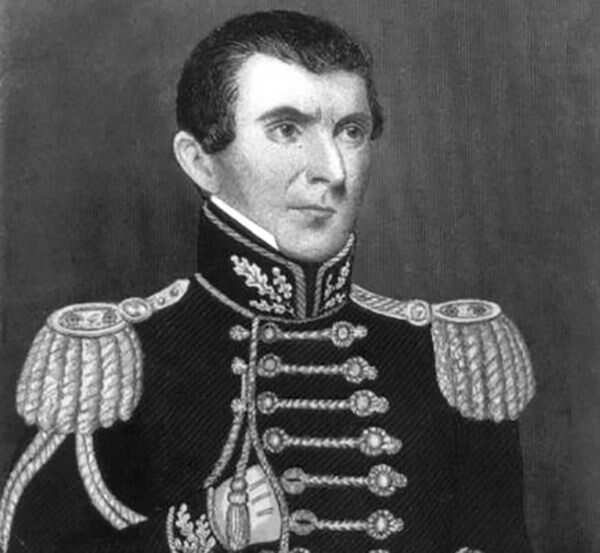
Dr John Cook Bennett, physician and promoter of the tomato. (courtesy Wikimedia Commons)
It all began with one physician who maybe liked the ketchup on his pizza a little too much. Jokes aside, Dr John Cook Bennett believed that tomatoes had medicinal properties and could help treat several digestive problems.Bennett was not simply suggesting people eat more vegetables. He believed that tomatoes had incredible medicinal properties. At a time when medical knowledge was still developing and many common illnesses had limited treatment options, such claims attracted considerable attention. He recommended consuming tomatoes in different forms, whether raw, cooked or as catsup, which we now commonly call ketchup. His claims soon began circulating beyond medical discussions, and people started looking at the humble tomato as something more than just another ingredient in their kitchens.But the real turning point came when entrepreneurs saw an opportunity in Bennett’s claims. Rather than asking people to eat more tomatoes, they began selling something that looked much closer to conventional medicine: pills made from tomato extracts.
How tomato pills became America’s latest medical craze
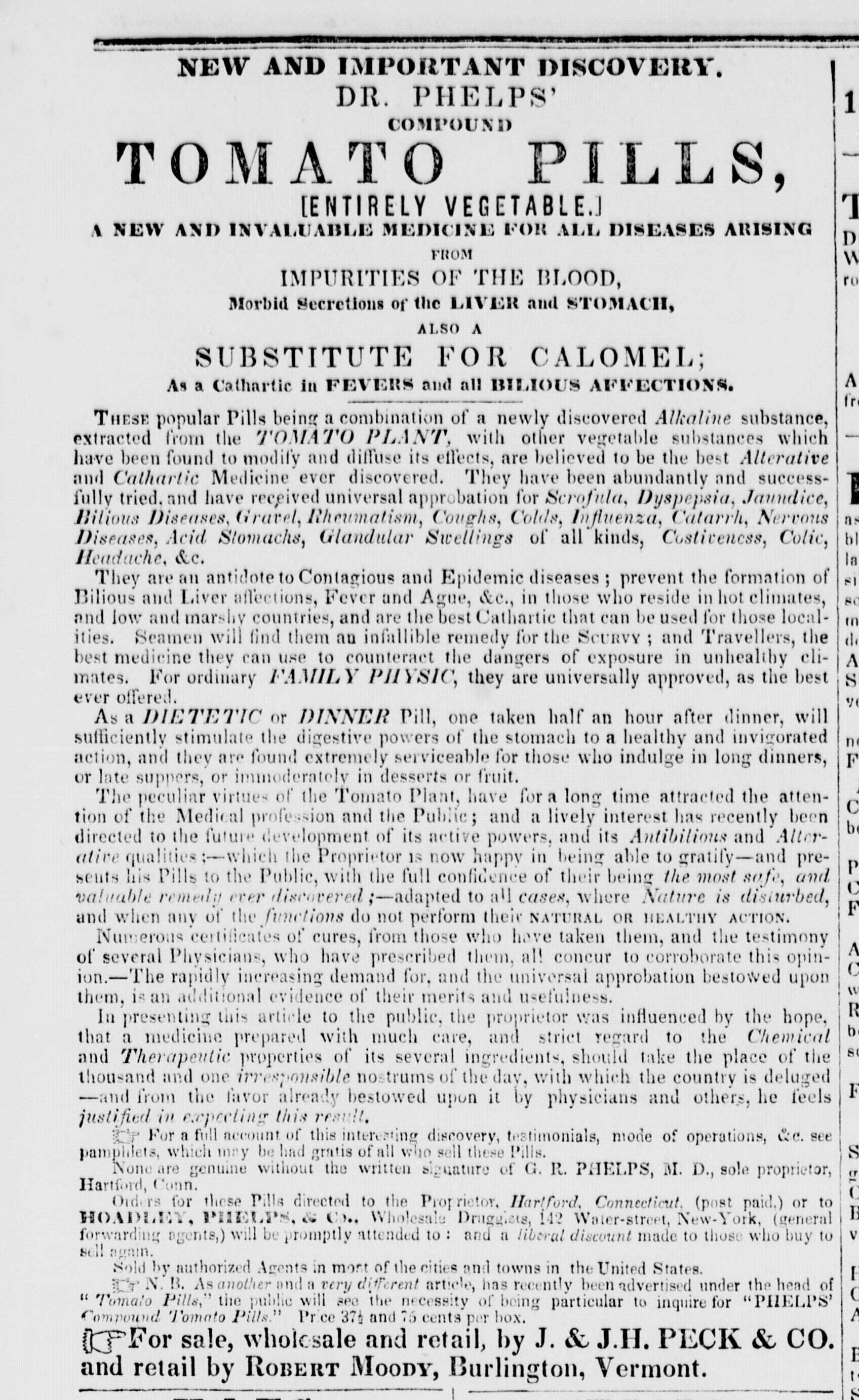
An advertisement for Dr. Phelps’ Tomato Pills, from the Burlington Free Press, November 23, 1838. (Courtesy- Library of Congress)
The idea soon caught the attention of people looking to make a business out of it. By 1837, newspapers across America were carrying advertisements for a product called Dr Miles’ Compound Extract of Tomato, marketed by a Cleveland-based merchant named Archibald Miles. He claimed that his pills had been carefully developed and tested over several years and could help treat a wide range of illnesses, from indigestion to more serious conditions.As the popularity spread, Miles was soon joined by another competitor, Dr Guy R. Phelps, a Yale-trained physician who began selling his own Compound Tomato Pills. His product promised similar benefits, but the growing competition was not something Miles was particularly happy about. What followed was an unusual public dispute between the two manufacturers, with each questioning the authenticity and effectiveness of the other’s pills.The disagreement soon spilled into the media, with newspapers all over America covering the war while also maintaining the craze for the product through advertisements. Both parties threw accusations at each other. Miles accused Phelps of selling an imitation, while Phelps hit back by questioning Miles’ medical credentials and accusing him of stealing his formula. Both sides published claims and endorsements to convince customers that their product was the genuine one. Newspapers, meanwhile, continued carrying advertisements and reports about the supposed benefits of tomato pills, helping the craze reach even more people.By 1838, this rivalry had become so prominent that it came to be known as the Tomato Pill War. The reporting by Atlas Obscura and food historian Andrew F. Smith’s book The Tomato in America account for how what had started as a physician’s enthusiasm for an ordinary vegetable had turned into a full-fledged commercial battle, with two manufacturers competing to sell Americans the supposed healing power of tomatoes.What makes the entire episode even more fascinating is that the two manufacturers were not simply competing to sell a new medicine; they were competing to convince people that their version of the tomato cure was the real one. The humble tomato had become the centre of a medical and commercial obsession, with newspaper advertisements doing much of the work of convincing the public. But behind all the promises of better health and miraculous cures was a rather interesting question: were these pills actually made from tomatoes at all?