








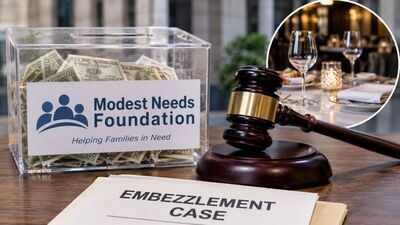
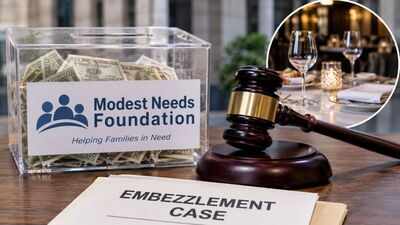
The founder of a New York charity established to help low-income families has been sentenced to 8 years in prison after stealing more than $2.5 million in donations to fund an expensive personal lifestyle. Keith Taylor, who led the Modest Needs Foundation, used money intended for people struggling with unexpected bills to pay for luxury accommodation, costly restaurant meals, food deliveries and other personal expenses. He also created a fake board of directors, listing people including a bartender and his housekeeper without their knowledge, to make his spending appear authorised.
How did the charity founder steal millions meant for struggling families
According to the US Department of Justice, Taylor founded Modest Needs in 2002 with the aim of helping low-income individuals and families facing unexpected financial difficulties. The charity operated through a crowdfunding model, allowing donors to contribute towards essential expenses that people living from one pay cheque to the next could not afford.Its support was intended for situations such as unexpected medical bills and repairs to broken household appliances. The organisation focused on people who were working but had little financial security when an emergency arose.However, prosecutors said Taylor gradually turned the charity’s finances towards his own needs. The Department of Justice’s October 28, 2026 sentencing announcement stated that he had embezzled more than $2.5 million from the organisation and its donors since at least 2015.The earlier criminal complaint, announced by the US Attorney’s Office on June 11, 2024, placed the alleged period of theft between 2016 and May 2024. It described how donations intended to provide short-term financial assistance were instead used to maintain Taylor’s lifestyle.The Associated Press reported that the charity had attracted attention for its small-scale approach to philanthropy, allowing donors to see how their contributions could directly help individuals facing financial problems.
Where did the stolen charity money go
The money was spent on a range of personal luxuries, with expensive restaurant visits accounting for a substantial portion of the stolen funds.According to the Department of Justice, Taylor spent more than $320,000 of charity money at some of New York City’s most expensive restaurants and steakhouses. These included Per Se, Jean-Georges, Masa and Marea. He reportedly visited these establishments regularly, sometimes dining out twice in a single day.AP highlighted the prices associated with some of the restaurants. Marea’s menu included a dry-aged ribeye costing $240, while Per Se offered a nine-course tasting menu priced at $390.Restaurant bills were only part of the spending. More than $300,000 of the charity’s money went towards rent for Taylor’s luxury apartment on the 30th floor of a Manhattan skyscraper.He also spent over $100,000 on food delivery services and used charitable funds to purchase expensive electronic devices. The money was also used to cover his personal medical expenses, including cosmetic surgery.The Justice Department further revealed that Taylor transferred more than $270,000 directly into his personal brokerage account. He also routinely paid other personal bills using the charity’s bank accounts.
Taylor used a fake board to hide the spending
Prosecutors said Taylor attempted to conceal the misuse of donations by creating a fake board of directors. He claimed that the board had approved his personal expenses and provided oversight of the organisation’s finances.However, the people named as board members had no knowledge of their supposed positions. According to the Justice Department, Taylor used the names of acquaintances and listed them on the charity’s website and tax documents as members of its governing board.Those individuals included a bartender at Jean-Georges, a friend and his housekeeper. None of them had attended a board meeting or even knew that their names were being used in this way.The arrangement allowed Taylor to create the appearance that his financial decisions had been reviewed and authorised by others, even though the people named had no involvement in the charity’s management.
What happened after the investigation began
Taylor’s activities came under federal investigation, leading to his arrest on June 11, 2024. The initial complaint accused him of embezzling approximately $2.5 million, committing tax offences and using other people’s identities as part of the scheme.The criminal case also involved allegations of tax evasion. According to the original Justice Department announcement, Taylor had failed to file personal income tax returns or pay taxes on money received from the charity for at least the calendar years 2017 through 2022. Prosecutors said this resulted in more than $1 million in unpaid federal income taxes.Taylor continued using the charity’s money even after his arrest in June 2024. The Justice Department said he had purportedly resigned from his position and was no longer supposed to have access to the organisation’s bank accounts under the conditions of his pretrial release.Despite those restrictions, he continued using the funds for personal expenses, including meals, medical bills and rent. The department said these actions also violated the conditions of his release.
What punishment did the charity founder receive
Taylor eventually pleaded guilty to the charges on August 18, 2025. On October 28, 2026, US District Judge Jennifer L Rochon sentenced the 59-year-old to 8 years in prison.The sentence also included three years of supervised release after his imprisonment. He was ordered to pay $3,118,237 in forfeiture and $4,144,645 in restitution. The case was investigated by the Internal Revenue Service’s Criminal Investigation division and special agents from the US Attorney’s Office for the Southern District of New York.